
Day 1: Friday
After dreaming about sparrows for two consecutive nights, the day had finally come – my friend and I were about to embark on a journey to an abandoned strip mine in Ohio. Now, you may be wondering: what is wrong with us? While I can’t answer that, I can explain our plan. My friend and I were searching for Henslow’s Sparrows, a grassland breeder that particularly enjoys the early succession grasslands that now grow over the abandoned strip mine. A couple other of our target bird species, like the Upland Sandpiper and Alder Flycatcher, could be found either along the way or at the same spot. And thus, the idea was born to plan a weekend camping trip to Ohio. Although we extended the invitation to others, it ended up just being the two of us.
I was buzzing with excitement by the time my last meeting ended on Friday. I also really hoped that the name of my “BIRDS BIRDS BIRDS” out of office calendar reminder wasn’t visible when I was sharing my screen. After like five trips back to my apartment to grab stuff we’d forgotten, notably pillows and sunglasses, we hit the road towards West Virginia.
Rather than heading to Ohio in a straight shot, we were detouring to the Canaan Valley wilderness in West Virginia, enticed by the breeding Alder Flycatchers that lived there. It also nicely broke up the drive so we weren’t doing all five hours after work on Friday.
We stopped in Front Royal for dinner, where a Californian taco truck surrounded by singing House Finches reminded me of home. In the interest of time, we ate our burritos in the car. It was disappointingly flavorless. I borrowed some of my friend’s hot sauce, getting more spice than I bargained for, and then put on a very convincing performance of me drinking my Coke at a normal rate and not at all in desperation to stop the burning in my mouth.
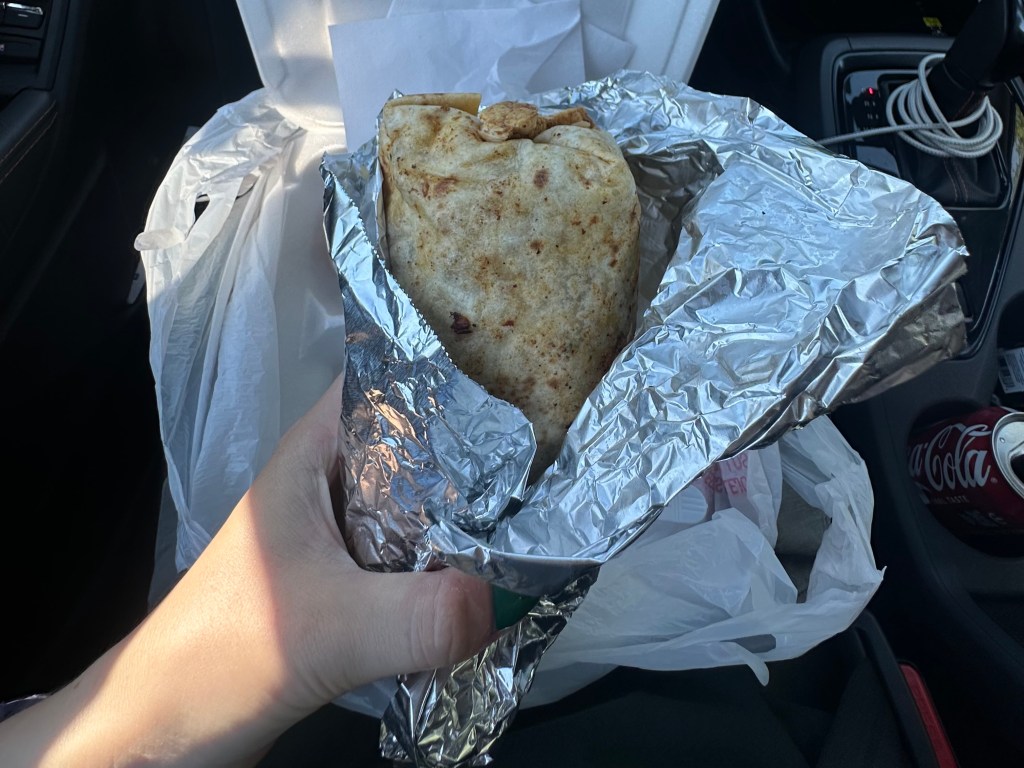
“I love this stuff,” he told me between bites of burrito, gesturing to the hot sauce. “I swear I go through like a bottle a week.” I merely nodded in response because I couldn’t feel my lips.
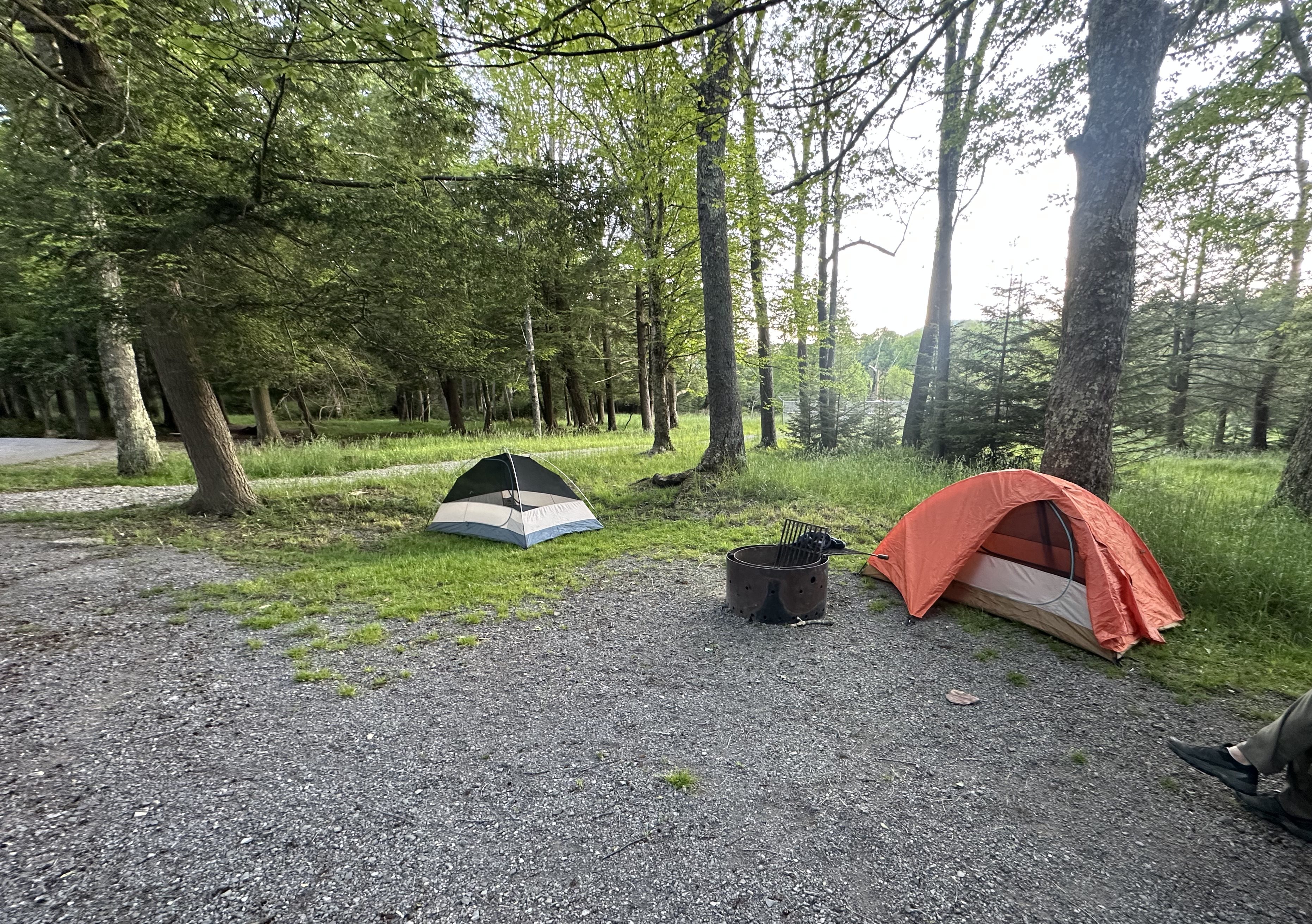
The rest of the drive passed without incident and we rolled up to our campground with an hour of daylight to spare. We then proceeded to waste 10 minutes trying to FIND our site by driving in multiple circles around the grounds. Campground maps, but without site numbers, were super unhelpful. It took us a while to figure out that site 15 was not located after 1-5 (of course not), nor in the first loop that went up to 25 (why would it be), but was instead sandwiched in with the 30s. Once we found it, we pitched our tents and set up camp while it was still light out.
We were itching to start birding. If we found our target the Alder Flycatcher right away, we could head to Ohio a bit earlier the next morning. We got in the car again and bravely embarked on a journey to a trailhead, which ended up being walking distance and just led back to the campground. Oops.
Now, typically the entrance to a trail being taped off indicates a closure. Most people would know this right away. However, consider that the start of this trail was a little bridge that was very easy to walk around, and you’ll see our confusion. Perhaps it was just the bridge that was closed? Surely, if the trail was closed, they would put up a sign saying trail closed? We walked around the bridge and started on the trail, quickly picking up singing Black-throated Green and Magnolia Warblers.
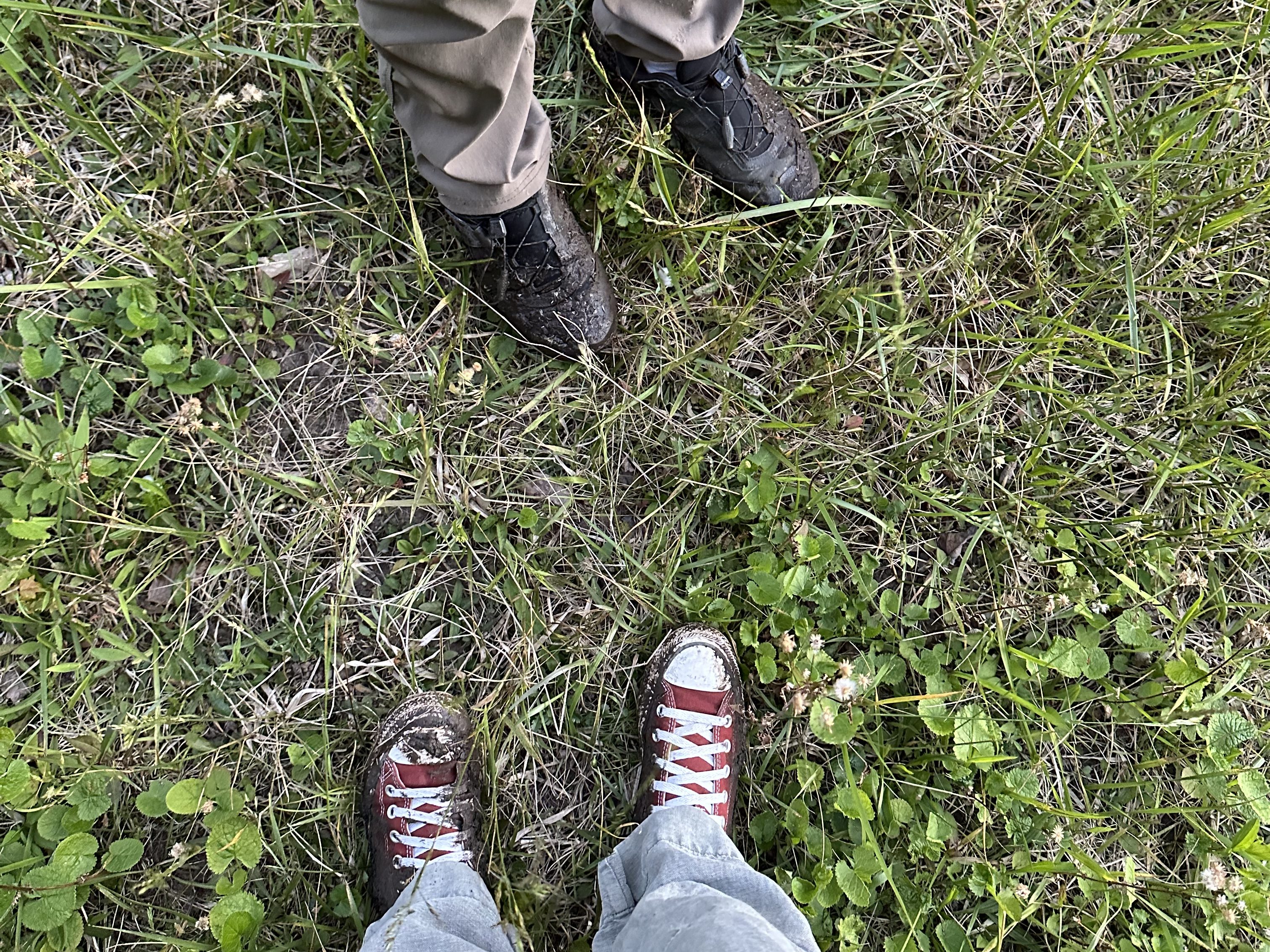
My friend and I came to realize why the trail was roped off. It was extraordinarily muddy. Not one to back down from a challenge, we squelched along the trail, sinking up to our ankles in mud. We must be wearing the proper footwear for this, you may think. Of course not. The cool mud felt quite nice as it caked the sides of my (formerly clean) Converse. It was all worth it when we found… not a lot of anything. Although a baby red squirrel was cool. We eventually surrendered and turned around.
I was surprised to see a second car at the trailhead and an older man walking around the side of the road, peering intently at the drainage ditch. His eyes lit up when he saw us. “What are you two looking for?” He asked.
When we said birds he seemed disappointed. “Ah, I hoped you were looking for Showy Lady’s Slipper too.” We then had a brief conversation about this rare orchid, only found in two places in West Virginia (and he didn’t find it at the first place this morning). We wished him luck in searching and advised he wear rubber boots. At this point, the sun was setting, so we moseyed back to camp.
The hooting of Barred Owls filled the campground as darkness fell. We quickly drifted off to sleep.
Day 2: Saturday
I laid in my sleeping bag at 5:25am, cold and annoyed at my ringing alarm, until I fully woke up and remembered where I was. West Virginia! Time for birds!! I got ready as fast as I could and crawled out from my tent, only to find my friend already awake. He confessed that he got up an hour ago and was too excited to fall back asleep. I poured myself some cold brew coffee from my cooler, spilling it all over the trunk of my car when my friend wasn’t looking, but truthfully I was so awake I didn’t need it.
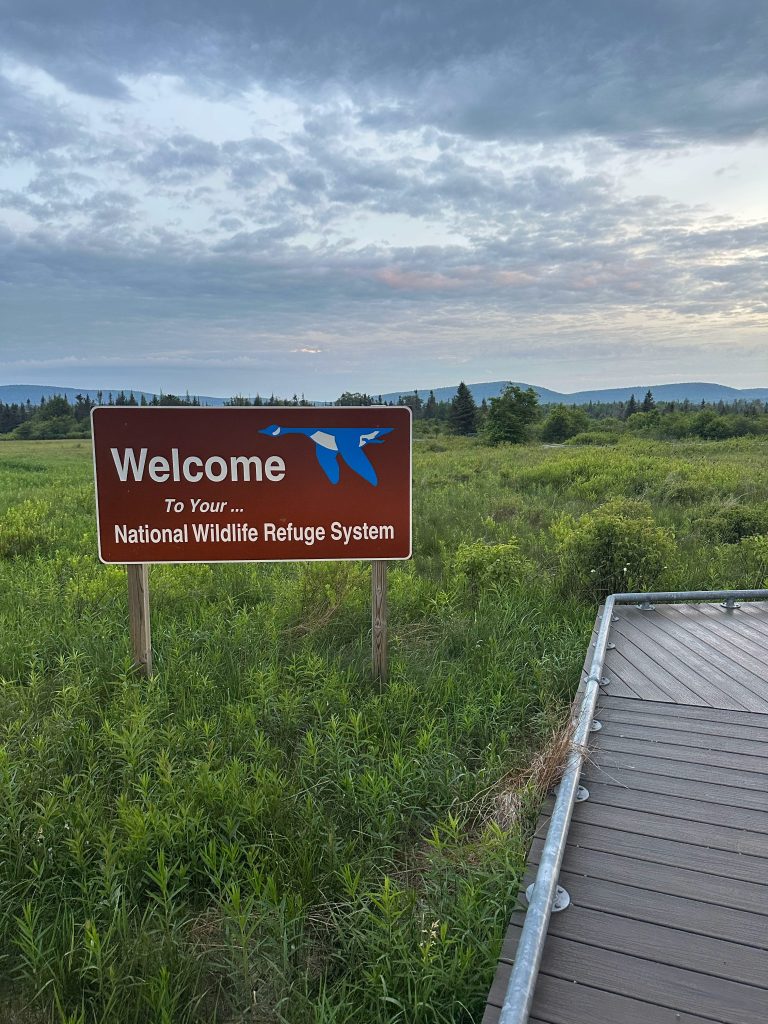
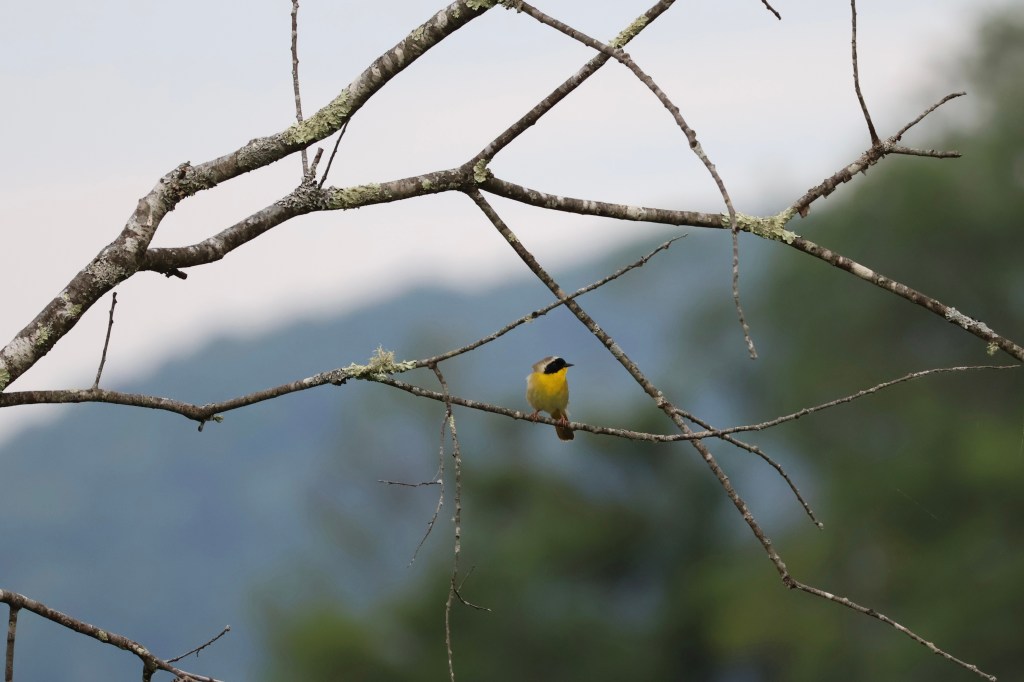
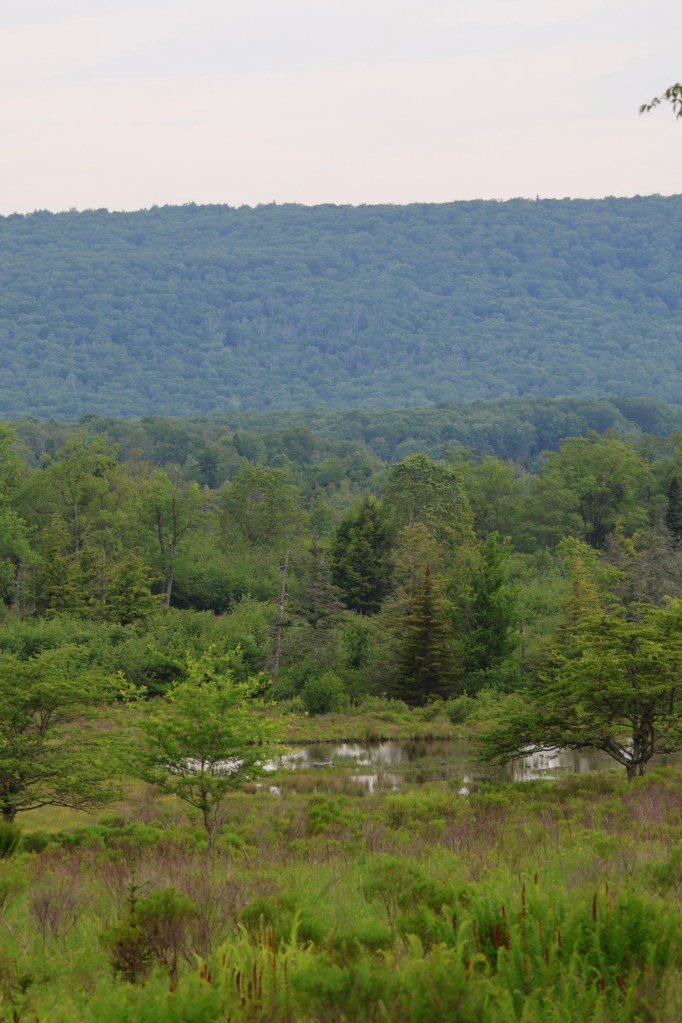
We planned on reaching our first location, a mere six minute drive, right before sunrise. Canaan Valley National Wildlife Refuge is basically a stranded piece of Canada, where cold-weather plants and animals are able to live much further south due to the high elevation. The bird we wanted here is called the Alder Flycatcher, a tiny greenish songbird with a distinctive song resembling someone saying “free beer!”
While most of their breeding range is in Canada, they also spend the summer season in this wet landscape. Our first stop, a boardwalk off Freeland Tract road, looked like a promising spot for them.
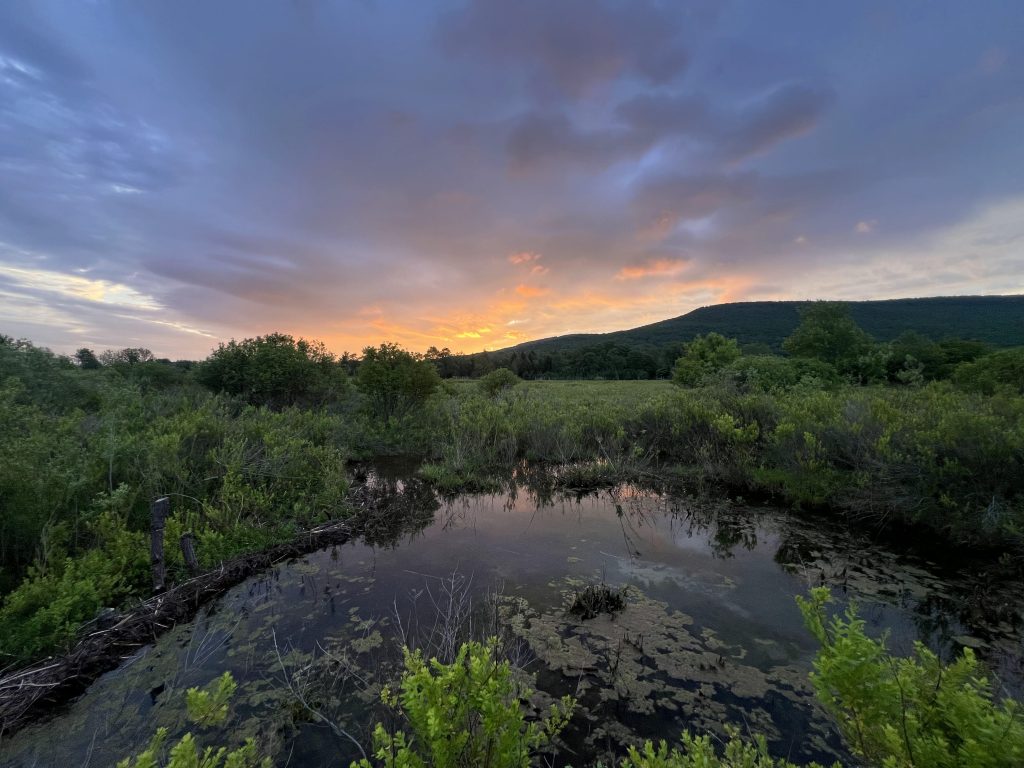
We made it right on time and got to watch a gorgeous sunrise over the boggy landscape. It didn’t take long for an Alder Flycatcher to start singing. It took us a full loop around the boardwalk before we got some better views of one, but we heard at least a couple, and got some other looks at them flying away.
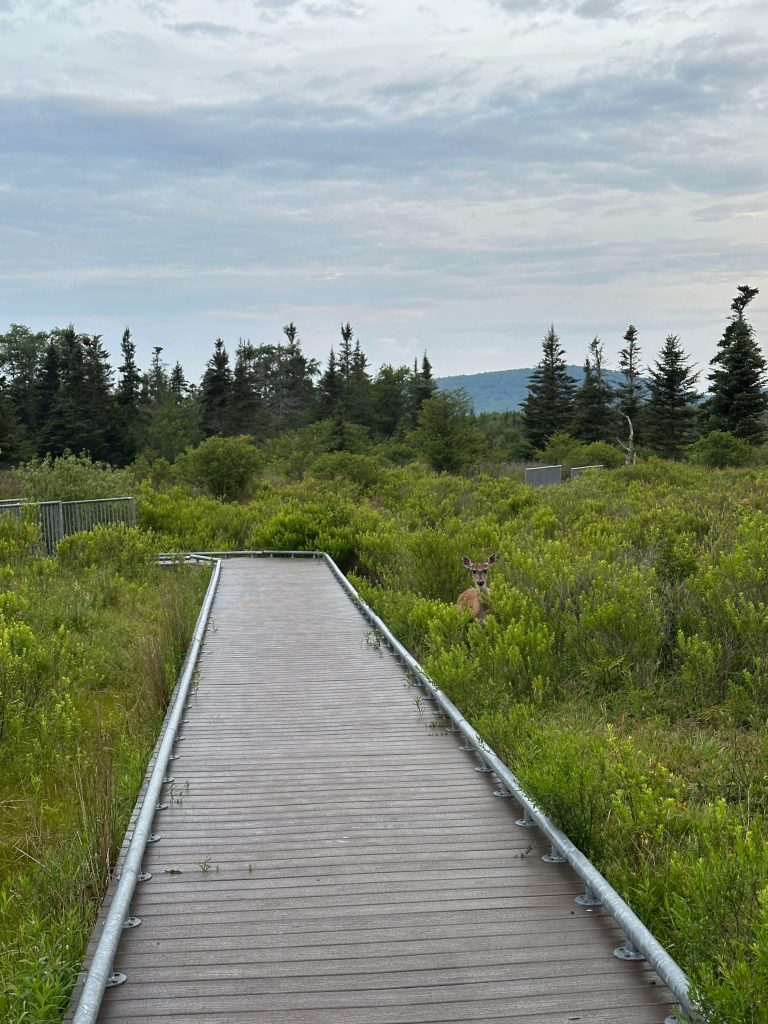
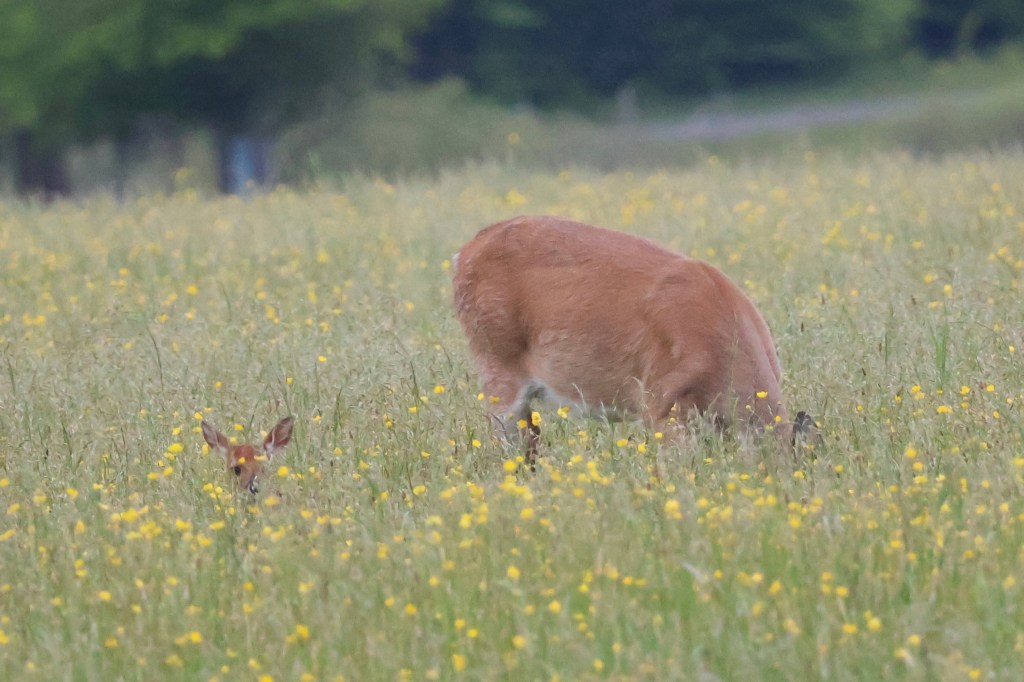
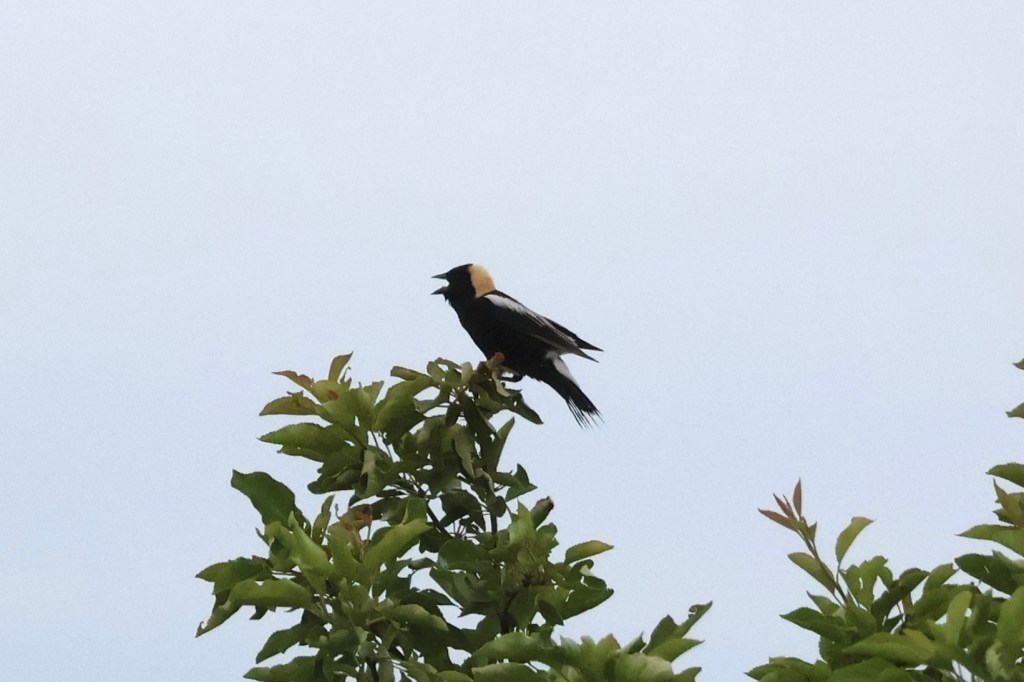
Making our way back to the grassy landscape on the other side of the road, we saw several Bobolinks, a peculiar blackbird with a yellowish crown and distinct white markings on its back. I was also delighted to see a very small baby deer, its ears barely poking above the tall grass.
Finding our bird before 7am meant we still had a couple hours of prime birding time and no targets in particular. We meandered around another section of the wildlife refuge before popping back over to our campground, finding another trail (an open one this time) yet somehow going the wrong way no less than four separate occasions. Whoever designed this park really hates visitors.
Satisfied with the birds we’d seen so far, it was time to pack up camp and head to Ohio! It would be another three hours to get there. Once we finished eating breakfast and packing the car, our ETA was around 2pm.
Driving through the northern half of West Virginia truly felt like driving through the middle of nowhere. The road was narrow and winding, oftentimes with signs warning of a 9% downhill grade. The denseness and lushness of the forest made the atmosphere feel jungle-like and we seldom passed other cars. I was grateful to finally reach a highway and cross the border into Pennsylvania.
Naturally, even from the car, we were still scanning for cool birds. Although my friend refused to submit a checklist for every single Turkey Vulture I called out. Our only actual notable find was a Broad-winged Hawk somewhere past the West Virginia University campus, soaring above the highway.
We heavily debated what we should do first in Ohio. On the one hand, the strip mine was slightly closer than our campground, so it made sense to go birding there first and set up later. On the other, we felt like we were more likely to see birds later in the day, so we should set up camp first and go out birding after.
But a third factor, much more looming and important than drive time or time of day, was also present. We were under a severe thunderstorm warning. Indeed, the sky rapidly darkened as we neared the Ohio River. It wasn’t until we actually read the warning that we came up with a plan C. According to the weather report, heavy rains, wind gusts of up to 60mph, and hail up to 1” in diameter were possible. That did not seem like ideal birding OR camping weather. The ominous clouds were not exactly a warm welcome as we crossed the bridge into Ohio, but I cheered anyway.
My friend found a coffee shop on the way to the strip mine where we could wait out the storm. We didn’t get there a moment too soon. With only a couple blocks to go, a torrential downpour unleashed upon the town, completely soaking us as we parked and sprinted to the entrance. The wind was so violent it flung open the coffee shop’s front door and rain pelted the windows. The sky outside was nearly black. With water flooding the roads after only a couple minutes of rain, we were most definitely stranded until it passed.
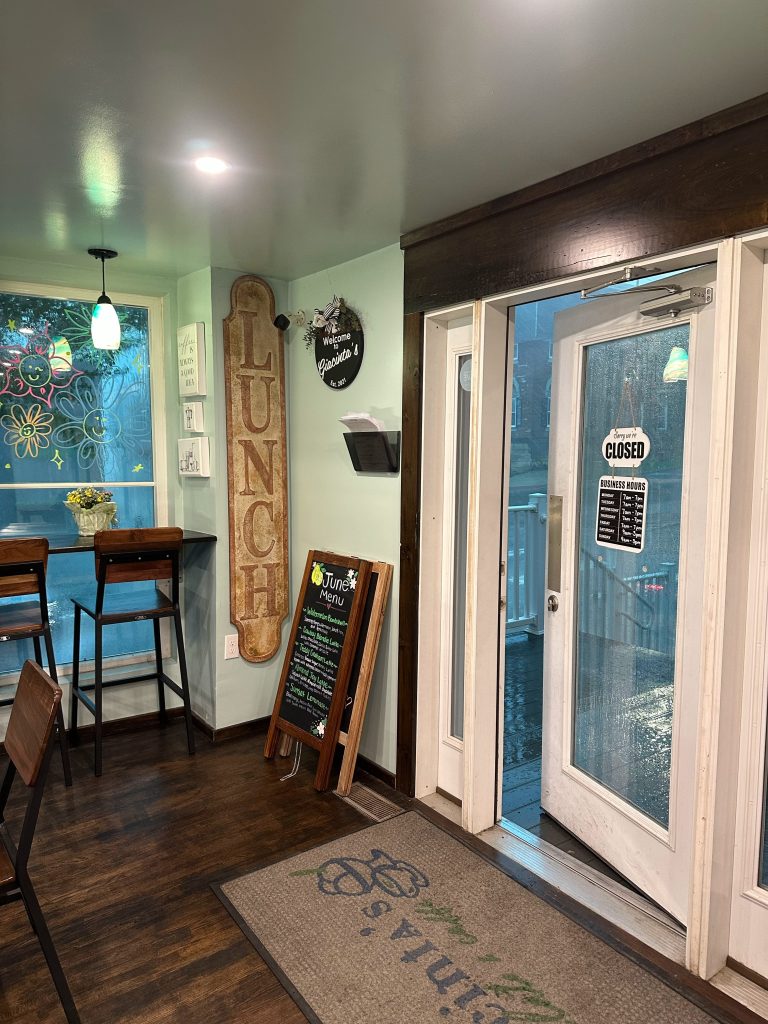
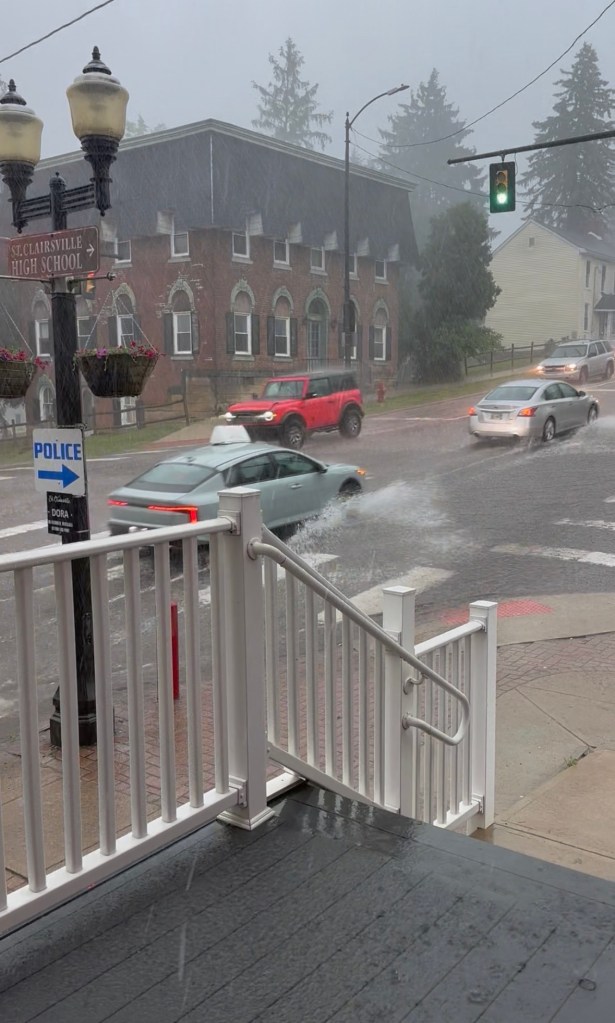
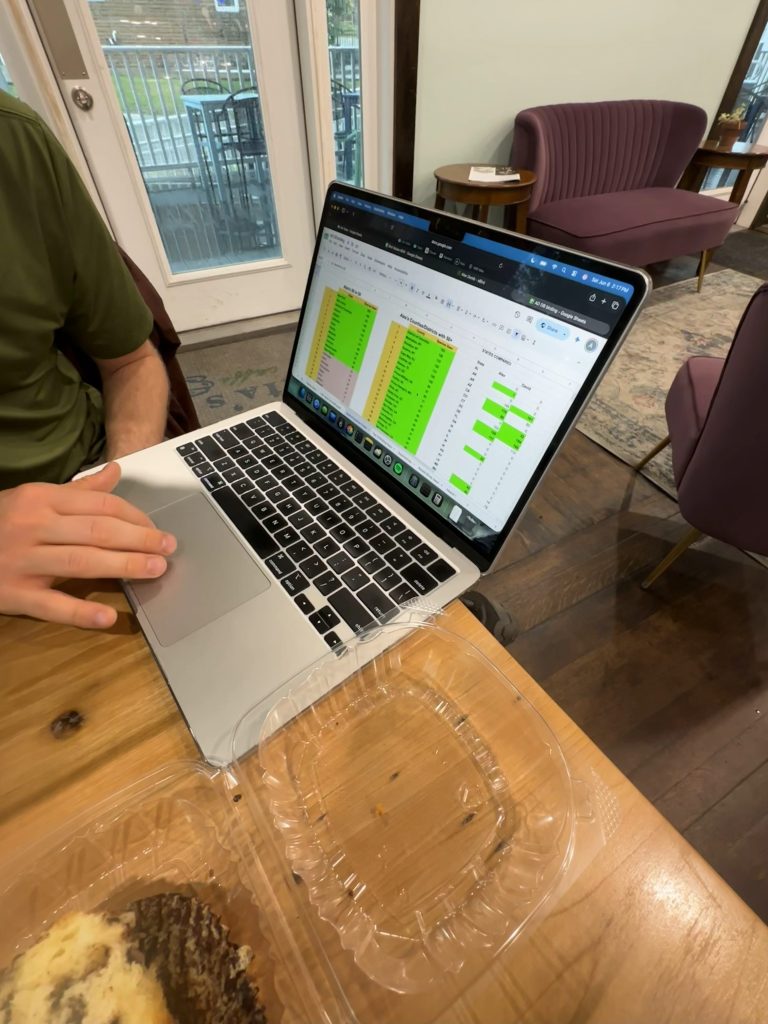
There are worse places to be stuck than a coffee shop. We enjoyed some decaf coffee and split a chocolate chip muffin, passing the time by looking at birding spreadsheets and maps on my friend’s computer. It wasn’t until 3pm that the rain began to lighten and we could finish our journey to the strip mine.
The official name of the strip mine, as per eBird, is Busby Road. It’s just a gravel road that cuts across a giant grassland, with a couple lots containing dirt mounds and construction equipment. Much to the dismay of local birders, the area will soon be converted to a solar farm, bad news for the birds that rely on that open oasis in a sea of woodlands. We tried not to dwell on that part as we slowly drove the road with the windows down.
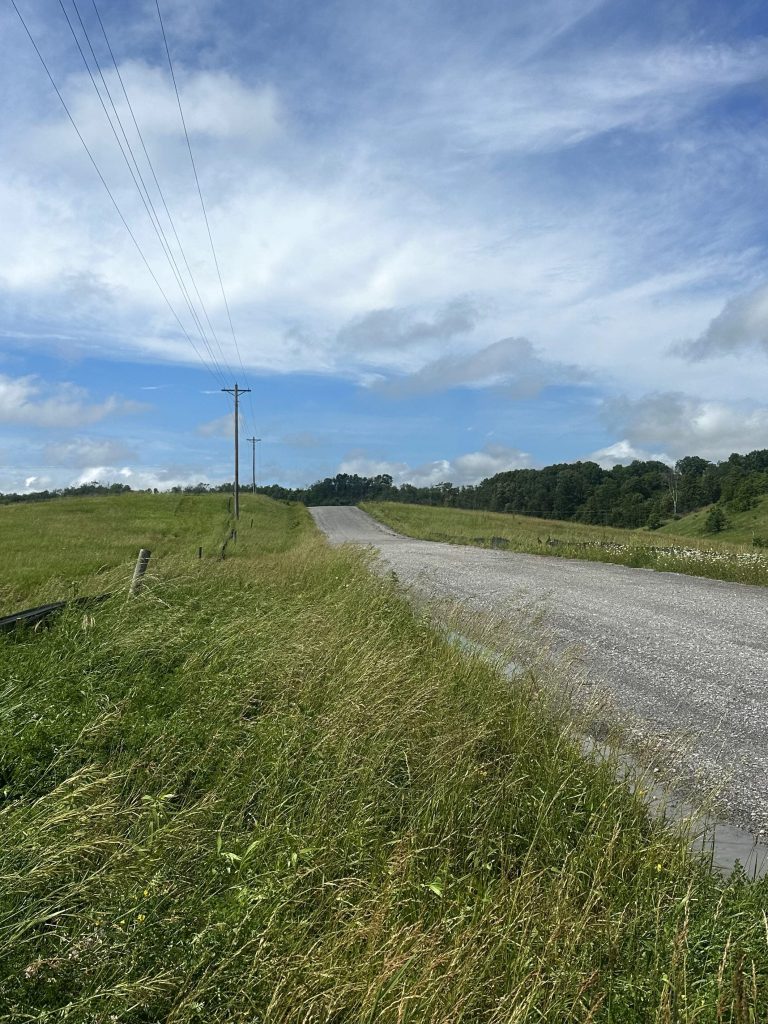
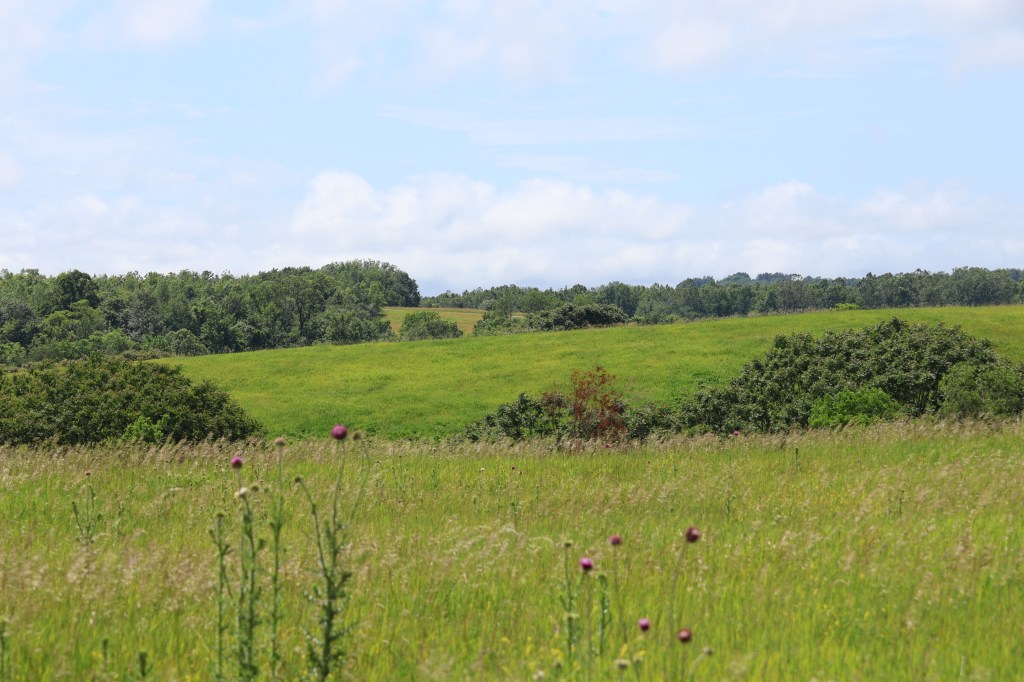
A random spot was as good as any, so I stopped the car and we got out to listen. It wasn’t long before we heard the insect-like song of a Henslow’s Sparrow, a tiny brown bird with a streaked chest and yellow on their face. Another birder once told me about the frustrating experience that is actually seeing one. They have one of the shortest songs of any sparrows, a feeble buzzy noise easily lost in the wind, that they’ll jump up onto a stalk of grass for a few seconds to deliver. Sure enough, it took us several passes along the road before we heard one reasonably close, and a good amount of waiting before we glimpsed it in the grasses. Their streaky breast is what differentiates them from the similar (and much more cooperative) Grasshopper Sparrow. Bird #2 down!
We circled back to the main gravel lot and parked by a muddy puddle, startling a shorebird that took off and circled a few times, calling incessantly. It ended up landing back in the puddle.
“Is that a White-rumped Sandpiper?” My friend asked incredulously. I’m not very good with shorebirds, so I pulled up a digital field guide to confirm. Sure enough, he was right. This little bird migrates all the way from southern South America to the Arctic Circle in Canada, making one of the longest migrations of any North American bird. Sometimes, they fly up 2,500 miles without rest!
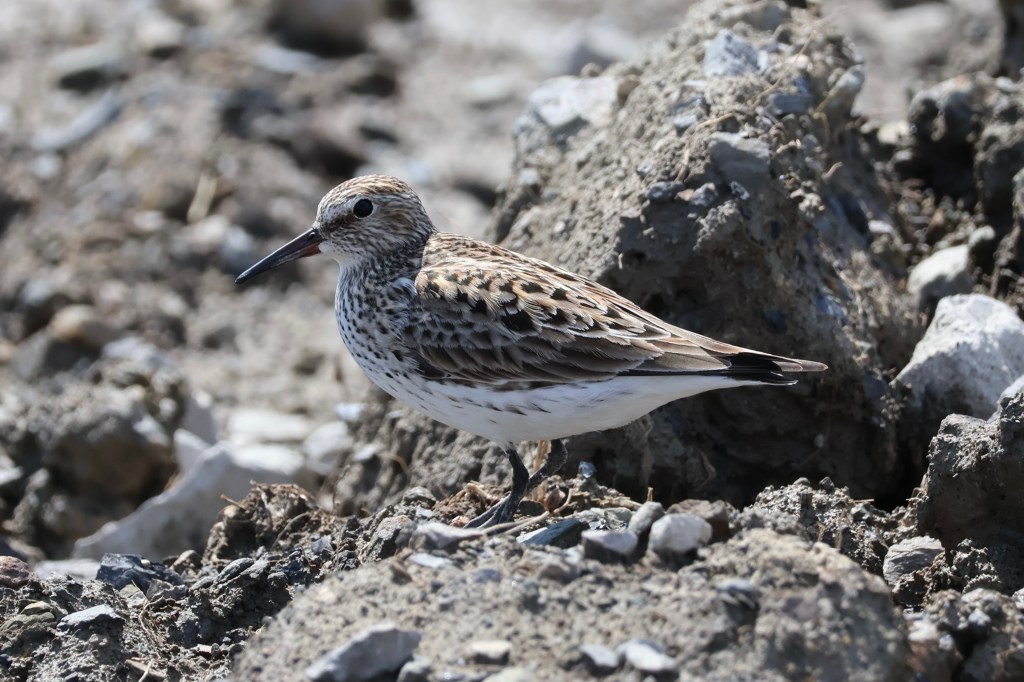
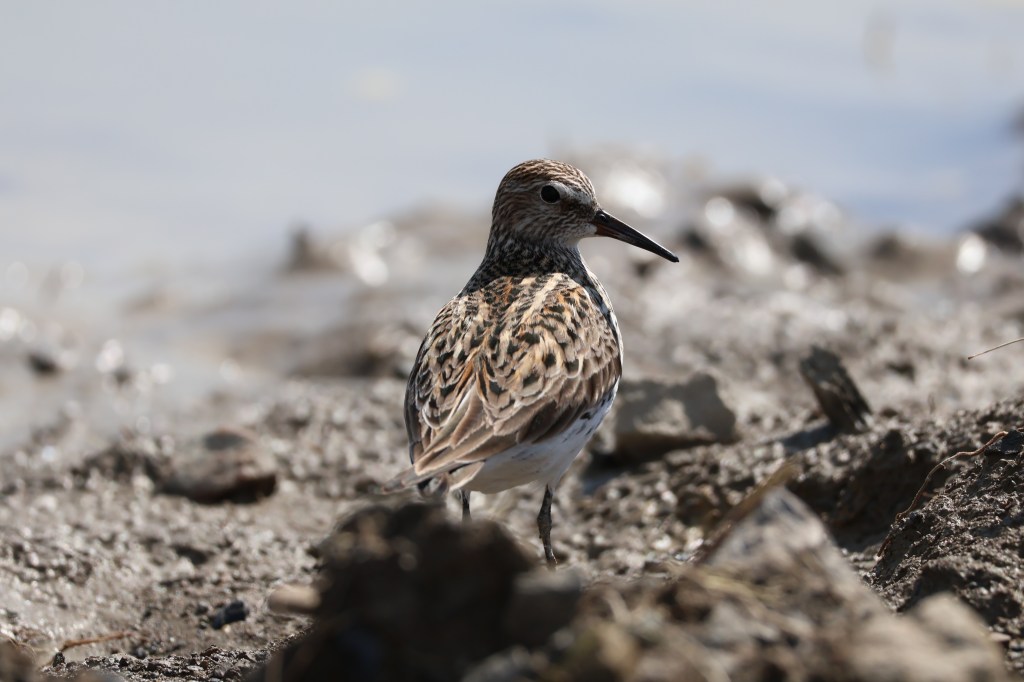
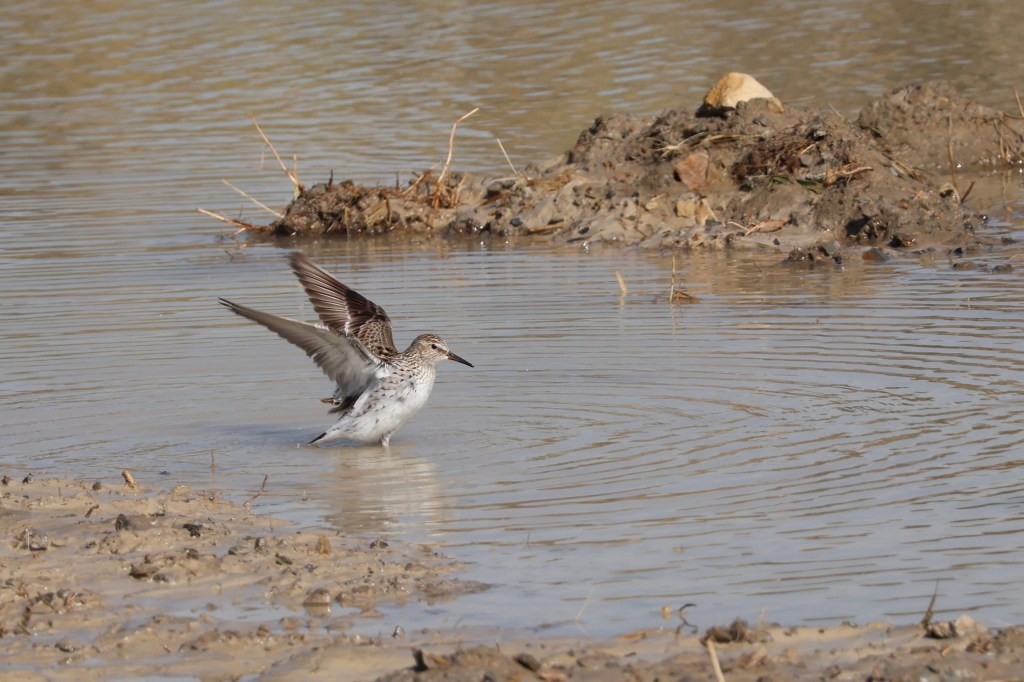
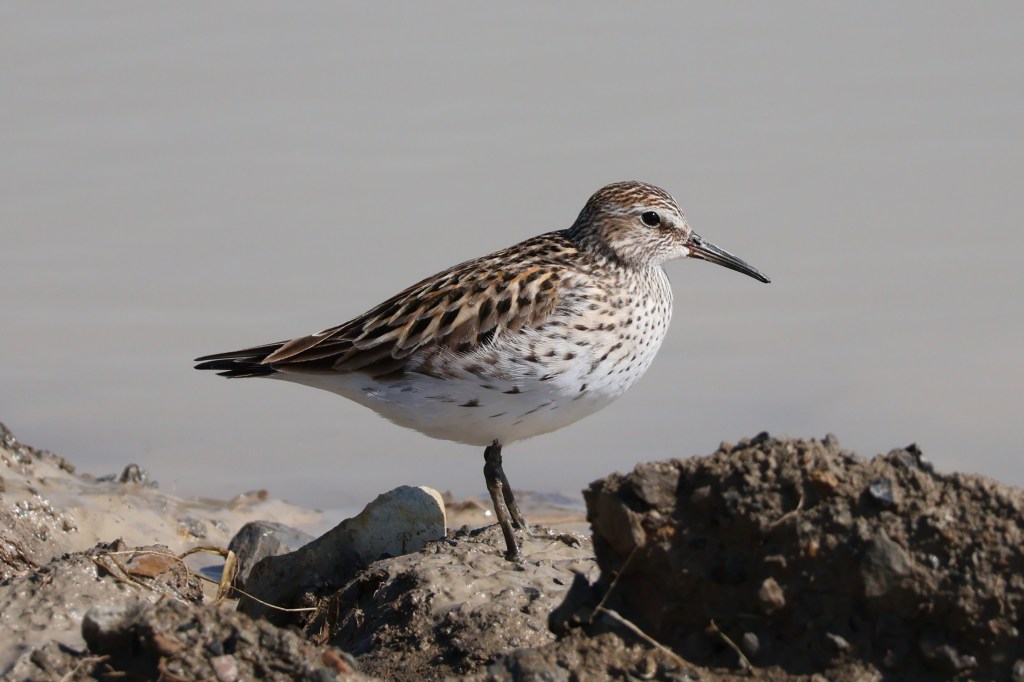
This was such a random place for one and not at all a bird we were expecting to see. Honestly, the sandpiper looked equally confused as to why he was in a construction site in Ohio. We apologized for disturbing his dirty little puddle and continued on our way.
Once again, we were faced with perilous mud (I guess that happens after a rainstorm), though I was better prepared with my footwear. As the landscape dried out in the afternoon heat, the birdsong dwindled. We made a couple passes hoping for an Upland Sandpiper, but eventually hunger and exhaustion started to get to us. We still had tomorrow morning to find one and it would be good to get an early night tonight.
The nearest town was Cadiz (pronounced by locals as CAD-ihz) and dinner options were looking bleak. We first ended up in a terrifying strip mall resembling a prison, with an all-gray brick facade and nearly nonexistent windows, although the pizza place we had our eye on was closed. Probably for the better. Instead, we found our way out of downtown to JP’s Saloon.
“Do you think I look like a working man?” My friend asked before we walked in, dressed in a white collared Patagonia shirt and hiking pants.
“Um, you look like a birder,” was my answer. We most certainly did not look like we belonged at JP’s Saloon. But dinner was cheap and filled us up, so it doesn’t really matter what we looked like.
By the time we arrived at the campground, we were so tired we barely acknowledged all the cool birds singing while we set up. A Yellow-throated and Kentucky Warbler called from the trees surrounding our site, but there was now a thunderstorm watch on the forecast, so we needed to get our tents set up in case it started dumping water on us. Sorry, warblers.
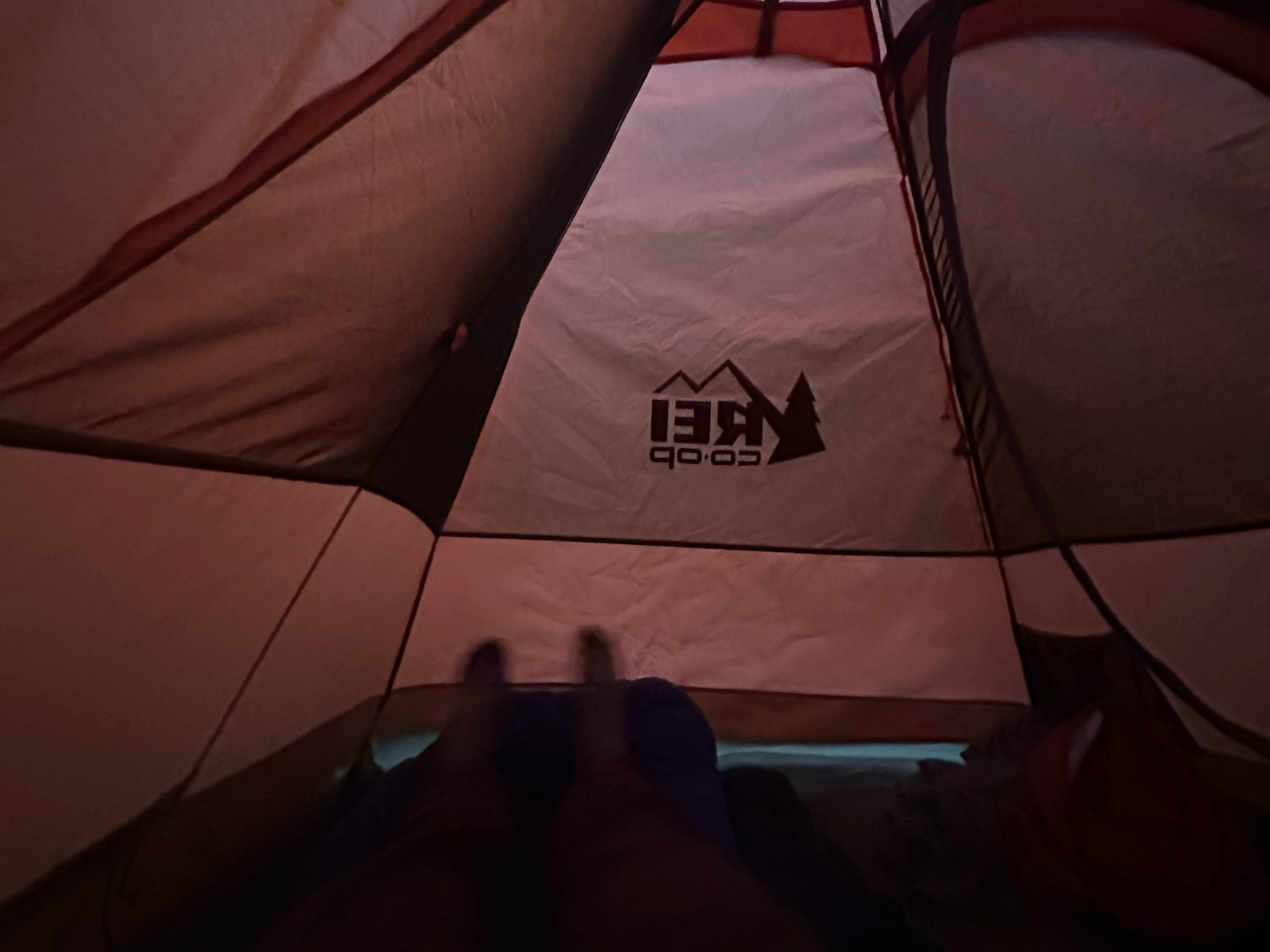
We hung out and chatted for a bit before the storm, milder than the one this afternoon, eventually drove us to our separate tents. Honestly, I’ve never camped in a real storm before, so it was cool to lay there and listen to the pattering of rain and see the distant flashes of lightning illuminate the tent. There was no reason to stay up late with another early morning the next day, so it wasn’t long after sunset that we both fell asleep.
Day 3: Sunday
Today, it was my turn to wake up at 4am in excitement, unable to fall back asleep with the potential of Upland Sandpipers running through my head. I listened to the to the hooting of a Barred Owl for about thirty minutes before finally getting up and having some yogurt for breakfast. It was still pitch black.
We left camp at around 5:10 and made our way back to Busby Road. Dense fog drifted across the road in front of us, so thick in sections there was no more than a couple hundred feet of visibility. Busby road was almost unrecognizable from yesterday under a thick blanket of cloud cover. There was nothing we could do but laugh and begin birdwatching anyway, driving slowly along the road and squinting at posts. No sign of any sandpipers yet, though there was a snapping turtle in the middle of the road.
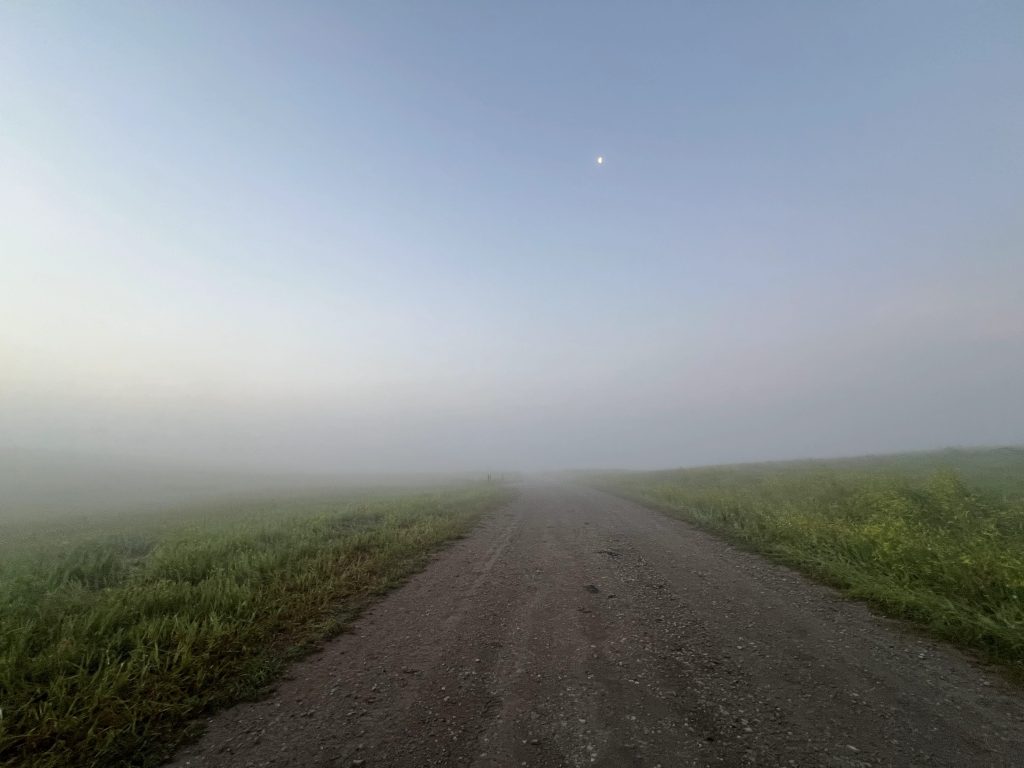
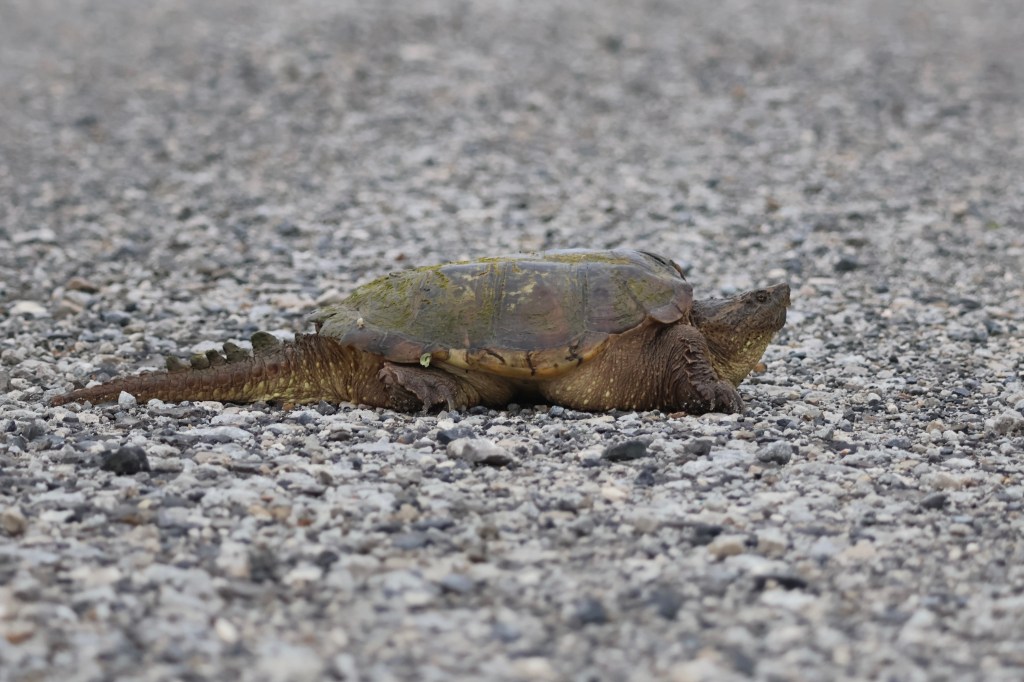
“Man, I love birding,” my friend remarked. I knew he meant it. Birding does have you doing the most ridiculous things, in the most ridiculous places, just for the love of the game. I loved it too. There was nowhere else I’d rather be spending my Sunday morning. We searched mostly in silence, occasionally repeating “UPSA” back to one another (the four-letter code short for Upland Sandpiper), as if it would manifest one.
Even though it was early on a weekend, we weren’t the only ones out there. Some workers were out loading machinery onto a trailer. I was a little nervous we would get yelled at for being there, but they seemed to tolerate our presence and nobody told us to leave. We took care to not get in their way.
After about three passes up and down the various parts of Busby Road with no sign of a sandpiper, and the fog showing no signs of lifting, we stopped to regroup. We hadn’t seen all of the road yet — it also extended back the other direction, into the forest. Though it wasn’t the right environment for the Upland Sandpiper, we could add a couple forest birds to our list, and maybe find another target of mine. We started down that direction instead to kill time and wait for the fog to lift from the grasslands. While we didn’t see anything crazy, we did get some good looks at two Yellow-billed Cuckoo, bizarre birds with long tails and a booming voice.
The fog was noticeably lighter when we emerged from the forest. Back to combing the same stretches of road. We parked and went to walk a muddy section for the fourth time, my eyes fixed on a patch of particularly uneven ground beneath me. My friend’s voice broke my concentration and I looked up. “UPSA!”
It was everything I’d dreamed of and more. The chicken-like bird, with a plump body and gangly neck, was perched atop a dirt mound down the road. It looked around curiously as I raised my binoculars and then my camera. Shaking with excitement, the only photos I took were slightly out of focus before it flew off.
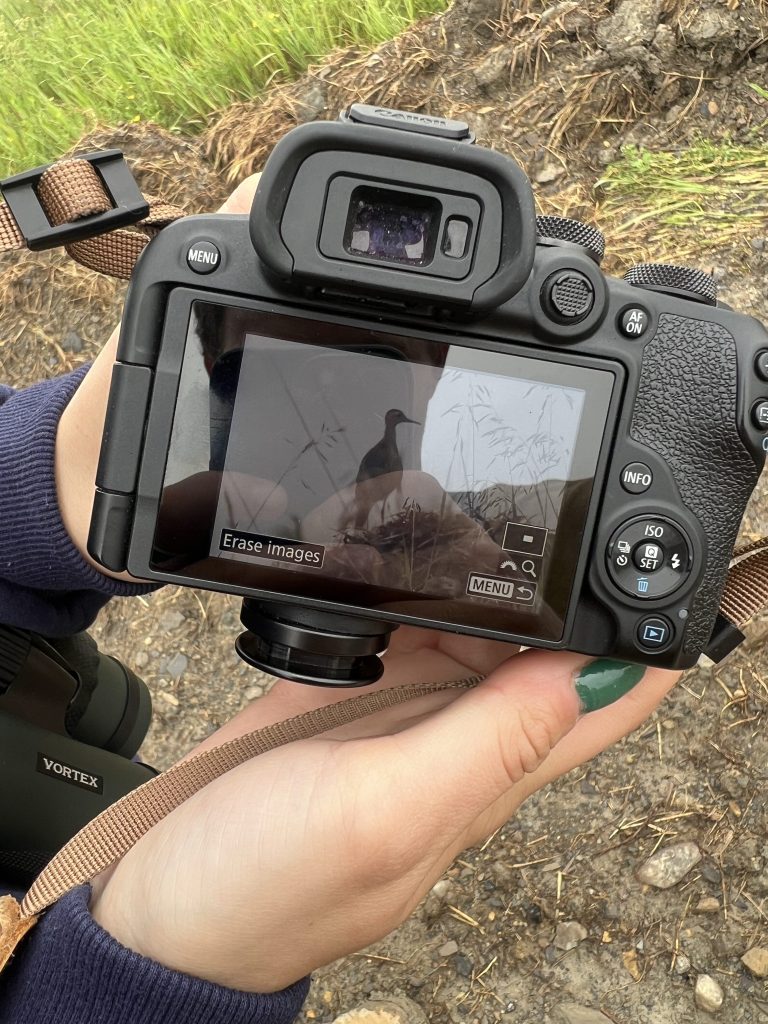
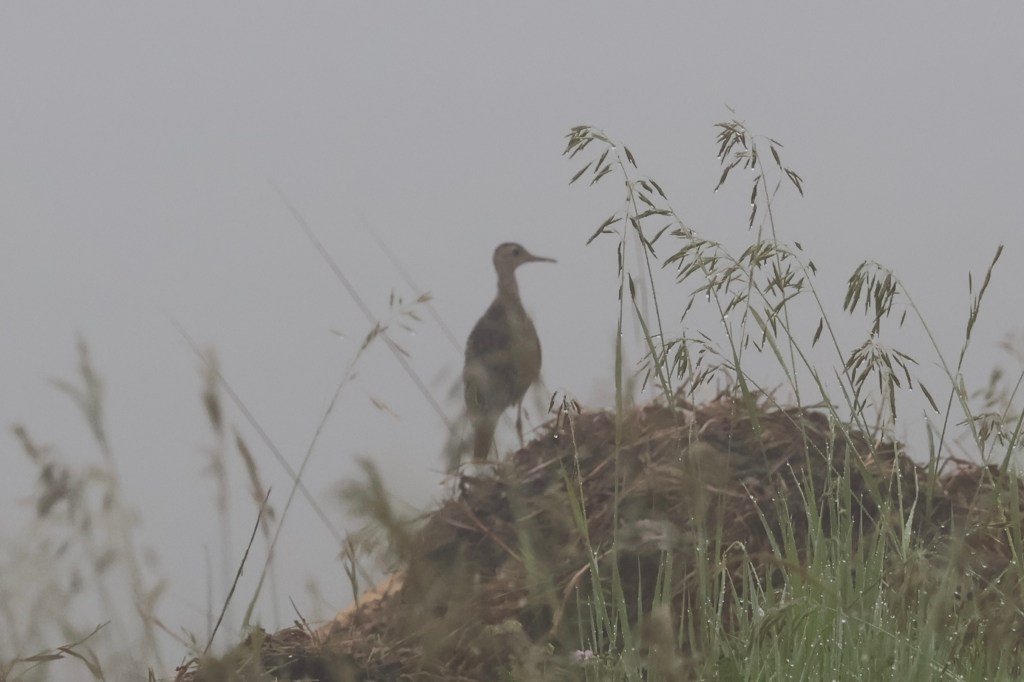
We attempted to follow it for a second look, but the bird had disappeared. Neither my friend nor I minded. We got a really great view of it, and even though my pictures were blurry, they were clearly of an Upland Sandpiper. It was time to get out of Ohio. After bidding Busby Road farewell and fetching our damp camping gear from our campsite, it was 9am and we were ready to head back.
We grabbed celebratory coffees and breakfast sandwiches from a Starbucks and spent the ride home swapping bird stories, playing 20 questions but with North American birds, and daydreaming about our next trip. Until next time!
 Summer
Leave a comment