
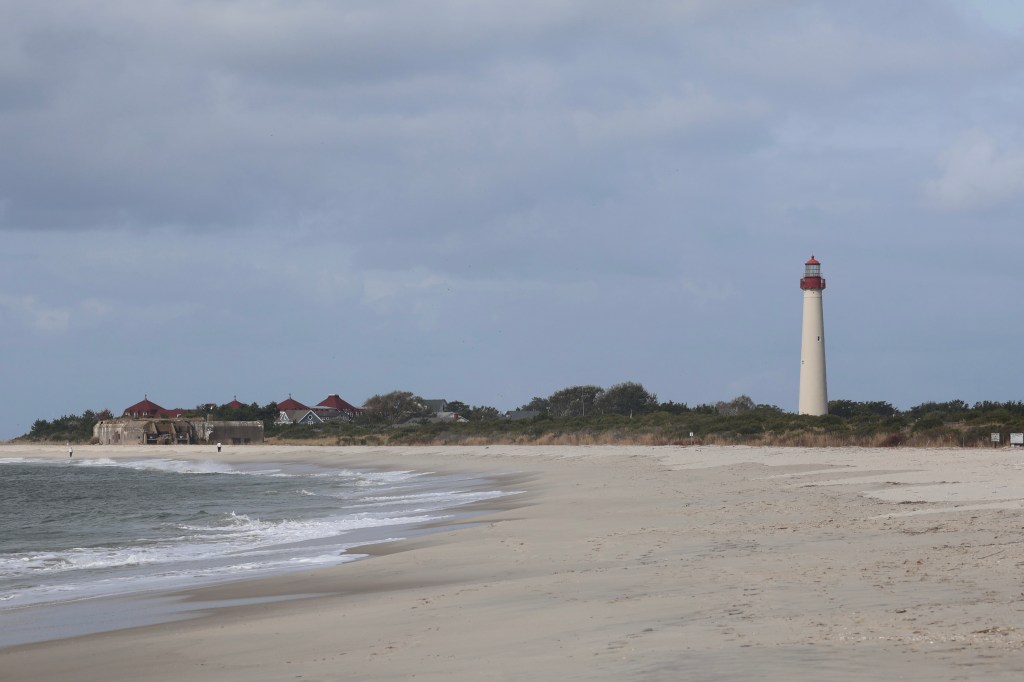
Thanks to the autumn air, I slept much better in New Jersey than I had the first night. The following morning I was in better spirits. I packed up my car in the dark of the early morning, folding up my blankets the best I could and stuffing them in my Ikea bag. I threw all my camping gear in my top Thule box for peace of mind, cracked open another iced coffee, and made my way to Higbee Beach before sunrise.
Yesterday, I’d overheard the Bird Observatory naturalists talking about this weekend’s strong winds disrupting migration. I come from a coast where a cold and breezy ocean is the norm, so yesterday seemed pretty tame to me. I guess that wasn’t true here. Strong northeastern winds would allegedly ground or reroute many migratory birds, so they anticipated a slow couple days. I secretly hoped they were wrong, but gazing out at the quiet, windswept trees from the songbird watch platform, I knew I was in for a slow morning.
I was the first one there, but only just barely. The uniform gray landscape was only broken by the twinkling, yellow lights from the harbor, matching the rapidly brightening eastern sky and glow of my car’s headlights as I pulled into the parking lot. The ocean air didn’t have the same bite as it did out west, but the cold and windy dawn felt like the coming fall. In the early morning light I found my camera and binoculars, and located the missing spoon I couldn’t find at the campground. It was in the side pocket of my backpack, exactly where I’d left it, and also where I swear I looked no less than five times this morning. I’d ended up having my apple sauce in the car as I drove, drinking it like a really thick smoothie. Oh well.

Gravel shifted underfoot as I spun around and surveyed my surroundings. I’d driven by the songbird watch platform on the way in, but it was empty, so I could take a few minutes to wander before making my way over. It was still too dark to identify anything. For reasons I can’t explain, I walked over to the water’s edge and, like an idiot, leaned over to look at nothing, dropping my binoculars straight into the wet sand. It took me a few seconds to register what happened before I snatch them back up, but by then it was too late. My strap had landed in the water and was soaked through, and sand filled all the little nooks and crannies of my lens. Twisting the eyepiece produced a loud crunching noise as the sand grated deeper.
Annoyed, I grabbed wipes from the back of my car and did my best to clean it off. Other cars began to trickle in as a burning orange overtook the mellow sunrise. My binoculars were still hopelessly sandy so I gave up and followed a stream of people to the songbird platform. The rickety wooden structure was tucked off the road and fairly nondescript, with a narrow staircase leading up to an L-shaped wooden platform complete with a few benches and a railing. Despite its modest appearance, more than 15 birders, myself included, were perched up at the top by the 6:47 sunrise. Others dotted the dyke across the road, armed with massive scopes.

I’d picked this spot because I’d hoped for a bigger crowd of more knowledgeable birders. I was still learning my common East Coast birds, let alone the tiny fall-plumaged warblers and songbirds. Trying to identify them as they flew by, darkened specks in the morning light, was not for the faint of heart. To my disappointment, the platform was nearly silent. Everybody would raise their binoculars at something wordlessly, with a few friends or couples murmuring something to each other just out of earshot before putting their binoculars back down. There was also the occasional pointing, with no verbal instructions on where to look or what to look for. Once I heard “is that a Dickcissel?” from somebody sitting on a bench staring in no direction in particular, which was answered by a couple grunts in what could’ve been agreement. I was too nervous to speak up in a group of people that all seemed to know each other and know what they were doing, so I just stood there silently with them, getting sand in my eyes every time I raised my binoculars.
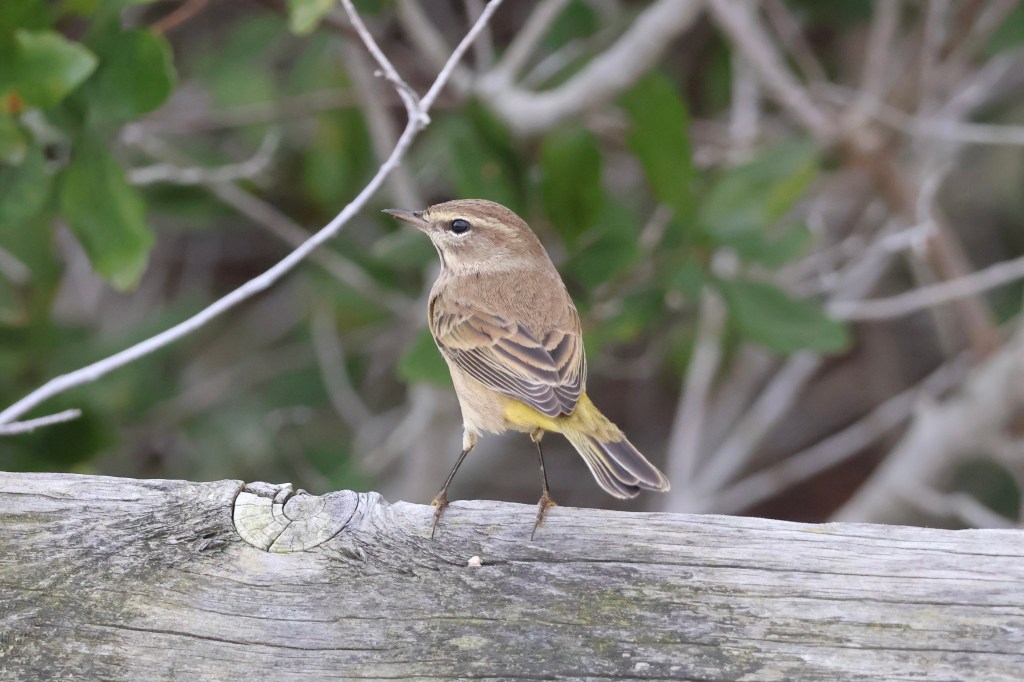
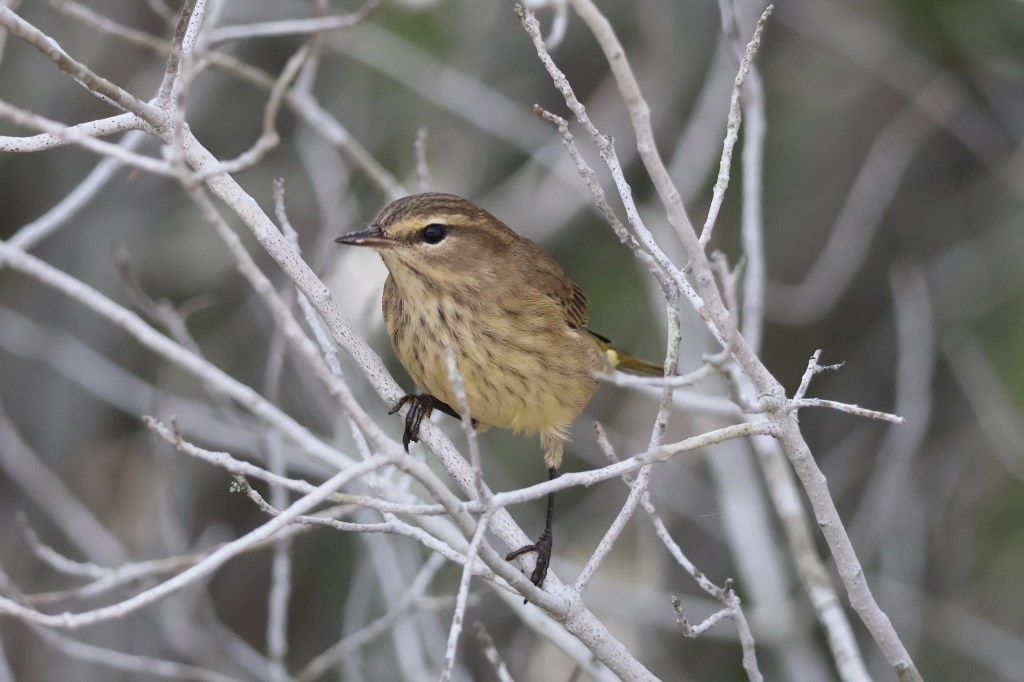
My only small win was identifying a Cape May Warbler and Palm Warbler all by myself, sheepishly consulting my field guide to confirm when I thought nobody was looking. I’d been reading a book on how to identify similar-looking birds and one of the general tips was to just to stare at them longer, making note of as many details as you can, BEFORE checking a guide. That was definitely helping, as I tend to get excited and want to check right away, both losing the bird in the process and then not remembering more than “small and brownish.”
I hoped that, with the rising sun, bugs (and then birds trying to eat them) would become more active. No such luck. The morning stayed windy and slow, and while I wasn’t the first to leave, I called it quits after an hour and a half of standing motionless. The higher the sun got, the lower my heart sank, frustrated by my lack of success. This was the first solo trip I’d taken where I felt truly lonely as a birder—like I was alone because I had to be, not by choice. I had no birding friends here to go with yet, and my friends out west would be just as lost as I was identifying my grainy photos. I started questioning why I was doing this—dragging my weary, sleep-deprived self out to New Jersey to chase elusive little migrants on the weekend, rather than resting or building a new social circle. I was still homesick and, like the warblers, feeling a pull in my chest to be somewhere else. I stopped at another parking lot in Higbee and made a feeble attempt to keep birding the area, but after I only flushed a Cooper’s Hawk I just wasn’t feeling it.
At around 8:30am, I truly considered just driving back to Virginia. I’d be back in time for lunch. I could do laundry or something. Go grocery shopping. For the hundredth time this year, I sat in the driver’s seat of my car, feeling existential. I’ve always struggled with giving things a fair chance, quick to write them off as either “good” or “bad” (usually “bad”) and giving them no opportunity to change. That cynicism has caused me a lot of heartache in the past, and is something I’m working hard to change. I’m still not perfect, and I will admit I have an underlying negative attitude about my move across the country. I liked the West Coast and didn’t feel any particularly strong urge to leave, so it’s hard to embrace the big change, instead fixating on everything that’s different or missing. If I had driven back after Higbee, I’d still believe that West Coast birding is simply better and the landscape here just doesn’t compare.
So I didn’t do that. And while I could’ve lied in this report and said that this trip was super fun and easy, and I’m so glad I went, I think it’s important to acknowledge that not everything worth doing is going to be easy. This trip was hard. I was tired and homesick and ill-prepared. The numbers of warblers I was hoping for never materialized. But despite my rollercoaster of emotions and the less-than-ideal conditions, I had fun, even if it was a choice I had to make.
So I dragged myself to the Bird Observatory again, and a few minutes later Cape May’s modern day Paul Revere drove by, yelling out his car window—except instead of the British, it was a single Roseate Spoonbill, and he was only a few minutes down the road. I leapt in my car, desperately needing a win, and joined 30 other birders at the lighthouse to admire the very lost rarity blown in by the winds.

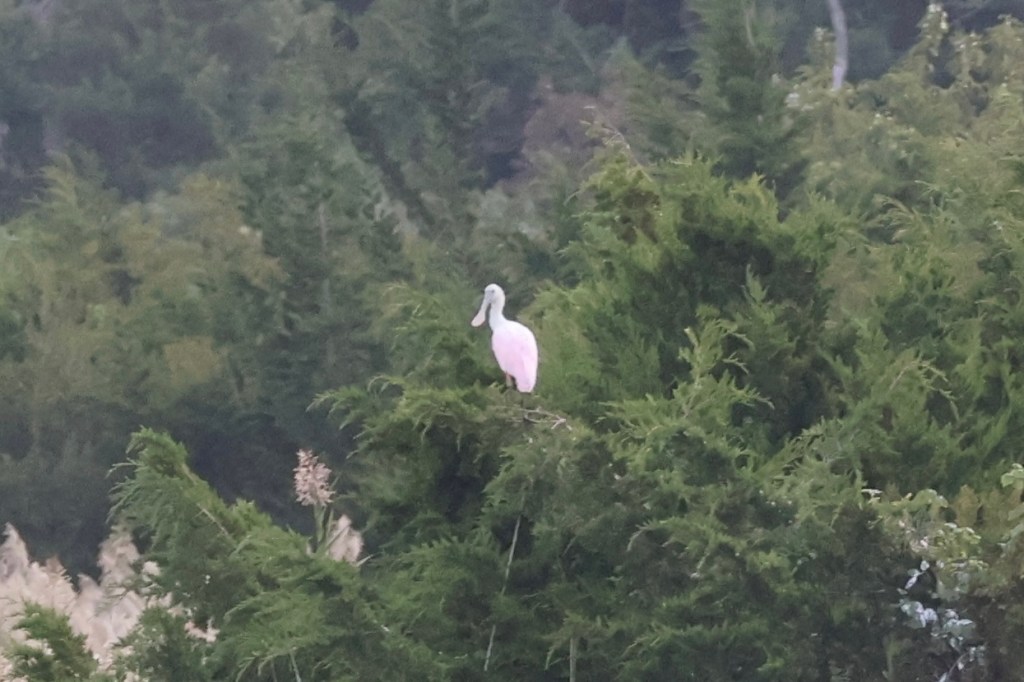
The aptly-named Roseate Spoonbill, a goofy-looking pinkish bird, sat by himself in a tree, with no less than 15 cameras/scopes/binoculars trained on him at all times. If you weren’t looking closely, you’d miss him—he could almost pass for an egret, until you noticed his oddly shaped beak and pinkish body. Everyone marveled at this out-of-place bird. Where did you come from? Wow—you’re far from home! What brought you out here? How are you liking the area? He didn’t answer any of these unspoken questions, just sat looking disoriented and a little silly. I felt comfort in knowing two other spoonbills had flown through yesterday, circling for a bit before heading back south. He had friends nearby and a whole lot of strangers looking out for him, even if he didn’t know it.
After I was content with my looks at the spoonbill, I began to circle the meadows again. The morning was still pretty slow. My warbler luck never turned, minus a couple more Palm Warblers. One of them attempted to land on my baseball hat, which startled the both of us—me when a tiny creature flew directly at my face, and him when I suddenly ducked out of the way. He regarded me curiously from the bushes instead, posing for a few pictures. I returned to the hawk watch platform a few hours later to check on the spoonbill (he had left) and ask where I could find some skimmers.
Like many of the birds I saw on this trip, Black Skimmers are a sight to behold. Their longer lower beak allows them to scoop fish off the surface of the water, but also gives them the appearance of a bird with an underbite drawn poorly from memory. There’s allegedly an established population in the San Francisco Bay area, and despite hearing instructions on how to find them (“they hang out there on the gravel island”) I never did. Granted, I also didn’t try very hard, but they didn’t make any effort to be seen either.
I spent a long time chatting with the naturalists on the hawk watch platform, mostly about birds, but also work and life in general. By the time I finally peeled myself away, it was past noon and getting hot. Like most coastal people when it gets warm, I headed to the beach.
That’s where the similarities between me and everyone else ended. Apparently, people tend to go to the beach in swim suits and flip flops. Instead, I sported hiking boots, a bandana, and a camo vest with my camera and binoculars. I looked better prepared for a journey through untamed wilderness than an afternoon at the beach.


But I was becoming a pro at looking and feeling out of place. I was on a Mission with a capital M. Although I was instructed the best time for skimmers was in the early mornings or evenings when the beach is less busy, I didn’t have either of those times available, so 1pm would have to do. They liked to hang out in a big group on the beach between the Convention Center and 2nd Ave, so it would just be a matter of finding them. I parked at one end, paid for an hour on the meter, and began my search. I alternated between walking on the beach and walking on the sidewalk. On the one hand, if I was on the beach already, I would see them faster and not have to keep walking out and checking. On the other, the sidewalk was slightly cooler, and I was less likely to get sand in my shoes. Either way I earned lots of stares.
Over halfway across the beach and I started getting worried. Last time I ignored instructions and tried to find a bird in the middle of the day was the California Condor, and I both didn’t find them and also nearly gave my sister and I heat stroke. I checked eBird to see the times and locations of recent sightings. To my surprise, someone had seen them at almost exactly this time yesterday, only a few hundred feet away. What are the odds they’re back at the same spot? I kept going, suddenly spotting a particularly dark flock of birds on the sand ahead. No way.
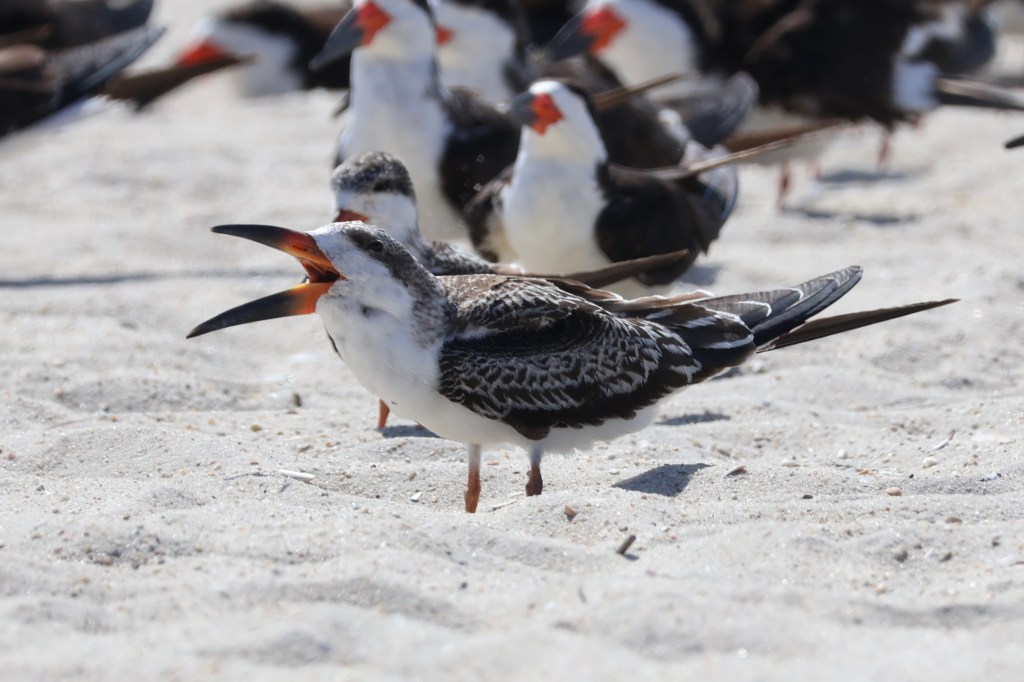
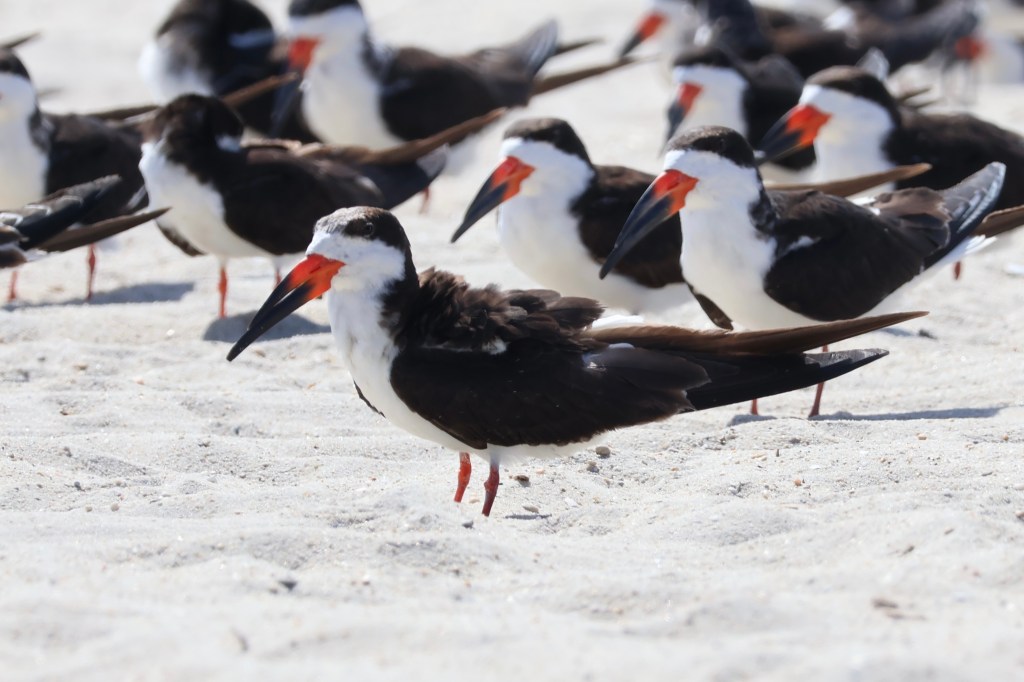
No amount of pictures can prepare you for seeing a bird in person. It doesn’t matter what kind. The skimmer flock had adults and juveniles alike, all with the same cartoonish beak, and I couldn’t take my eyes off them. I sat cross-legged in the hot sand to watch them, getting a well-timed picture of one yawning. The search and subsequent satisfaction was exactly why I loved birding, and reminded me why I do what I do. The skimmers alone made up for the emotional turmoil and bad luck of my trip, and made me more appreciative of the natural world and all that is has to offer (on either coast). I bid them farewell and ordered a well-earned iced latte for my drive home, content with my weekend.
 Summer Delehanty's Portfolio
Leave a comment