
As a born-and-raised Californian, I’m a bit of a wimp when it comes to extreme weather. And note that by extreme, I mean anything outside the 55-80°F habitable zone. I typically enjoy Seattle’s temperate weather. However, this year’s February was especially cold, and the novelty of the ice and snow wore off once I had to go outside.
But my desire to see birds is an overpowering one, so on an early February morning, my friend and I were wandering the Snoqualmie River despite the weather forecast. The area around Crescent Lake was promising enough to motivate both of us. With recent sightings of the dreaded crossbill, it also had reports of two of our target birds, an Evening Grosbeak for him and a rare Northern Goshawk for me.
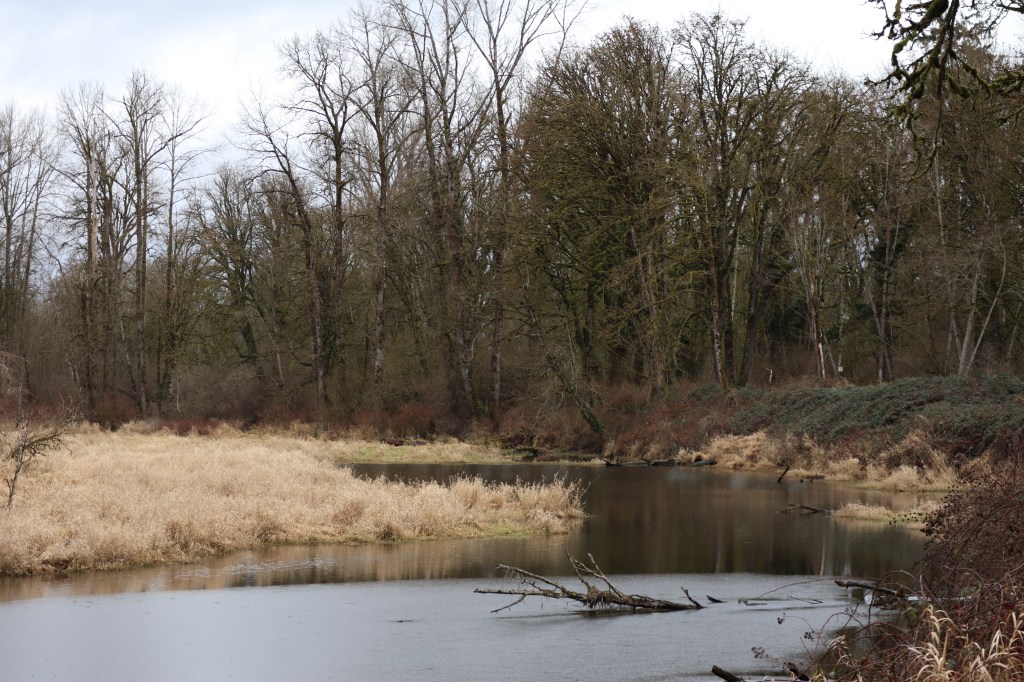
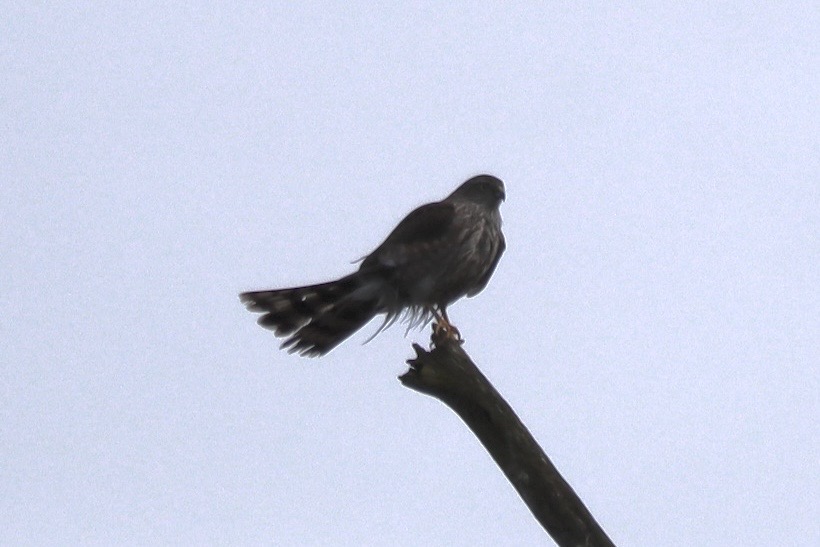
With a winter storm fast approaching—my roommates in Seattle were sending videos of snowfall at our house—the birds were quiet. After spotting a couple kestrels and a singular out-of-range Black Phoebe in the parking lot, we watched one of the kestrels get chased off by a tiny raptor, disappearing farther down the trail. I suspected it was another kestrel, or maybe even a Cooper’s Hawk, but my friend wasn’t so sure. And so we hurried after them. We were just in time to find the bird perched on a dead branch. We both struggled to get a decent shot in the mist and poor lighting, the bird nearly a silhouette against the cloudy skies. It wasn’t long before it took off again, the both of us scrambling to get a final look as it flew out of sight.
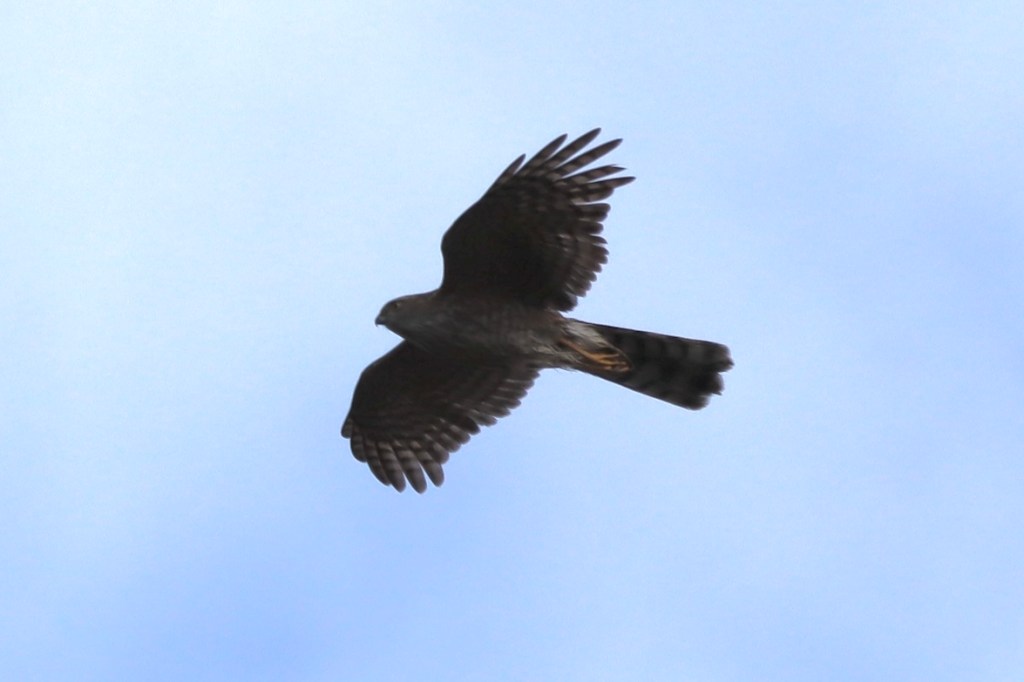
My friend was the first to exclaim that he thought it was a Sharp-shinned Hawk. Cooper’s and Sharp-shinned Hawks, or “Sharpies” for short, are annoyingly similar. The differences are subtle, with enough overlap between the two species that they require pretty close inspection. Cooper’s are much more common, and the only one either of us had seen. Although people report sharpies pretty regularly all over Seattle, especially at the marsh by our college, my friend and I would constantly joke that they’re probably misidentified Cooper’s Hawks.
Our only evidence to support a Sharp-shinned identification was the small size and the “vibes” of the bird. We knew our judgement was clouded by how badly we wanted it to be a sharpie, and discussing it with one another without a field guide would be pointless. We connected our cameras to our phones to download the pictures we got, messing with the brightness and exposure to see if it helped at all, before sending them to my friend’s brother. Cold fueling our impatience, we also posted on a bird identification subreddit while awaiting a response.
We decided to keep moving while we waited, arguing the entire time about the hawk and asking “did anyone say anything??” every couple of minutes. Our only company was a ridiculous number of Steller’s Jays, cawing raucously and flashing their shiny blue feathers against the winter landscape.
“Somebody commented!” We huddled around my friend’s phone in anticipation, only to see someone has incorrectly suggested “Red-tailed Hawk?” under his post. “In WHAT world does that look like a Red-tailed Hawk?” We both refreshed the page to see if anybody else had replied with a better answer. The more time passed, the more we were confident it was a sharpie, but needed somebody else to confirm we weren’t just delusional. Another commenter tentatively proposed Cooper’s, citing the angular head. However, after we posted a couple more pictures and they mulled over different identifying characteristics in the comments, they changed their mind and agreed it was a Sharp-shinned. Success!
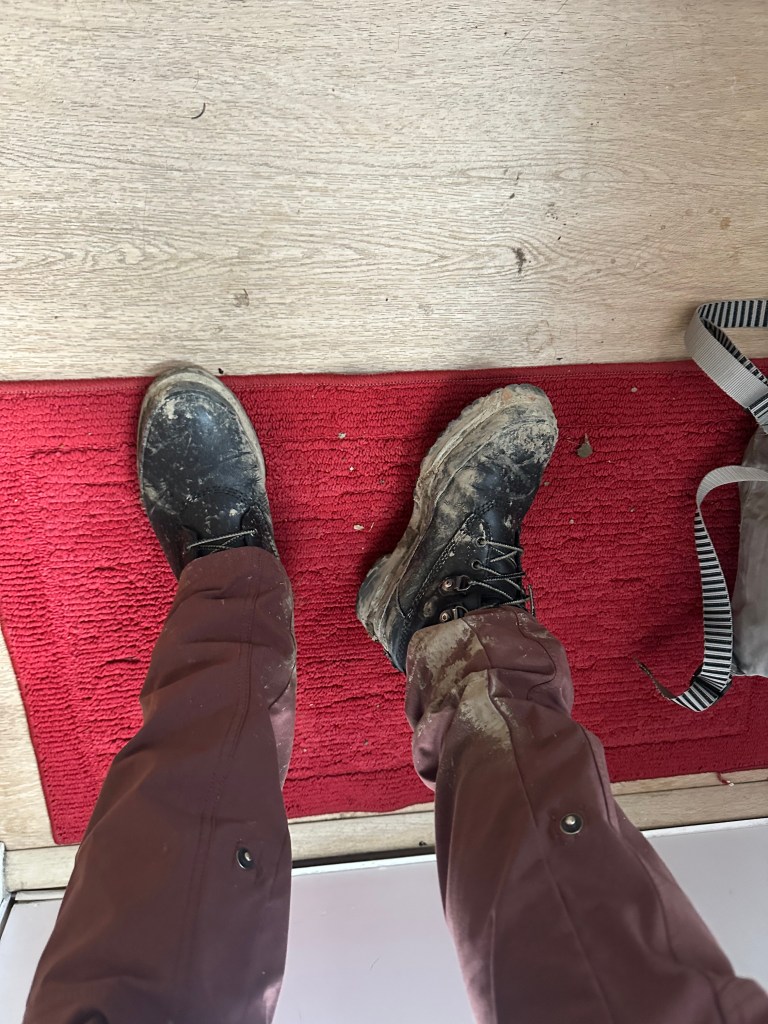
Unfortunately, that was the highlight of the trip. It only got colder and windier, with the “feels like” temperature dipping to 28, and we seemed to be the only living creatures dumb enough to be out. After a flock of Pine Siskins and a couple Green-winged Teal, we attempted to follow the loop back, losing the trail in the process and hitting a couple muddy dead ends. It started raining again, first a drizzle but increasing in intensity. By the time we made it back to the car, we were damp and muddy, grateful for the heated seats and a warm drive back.
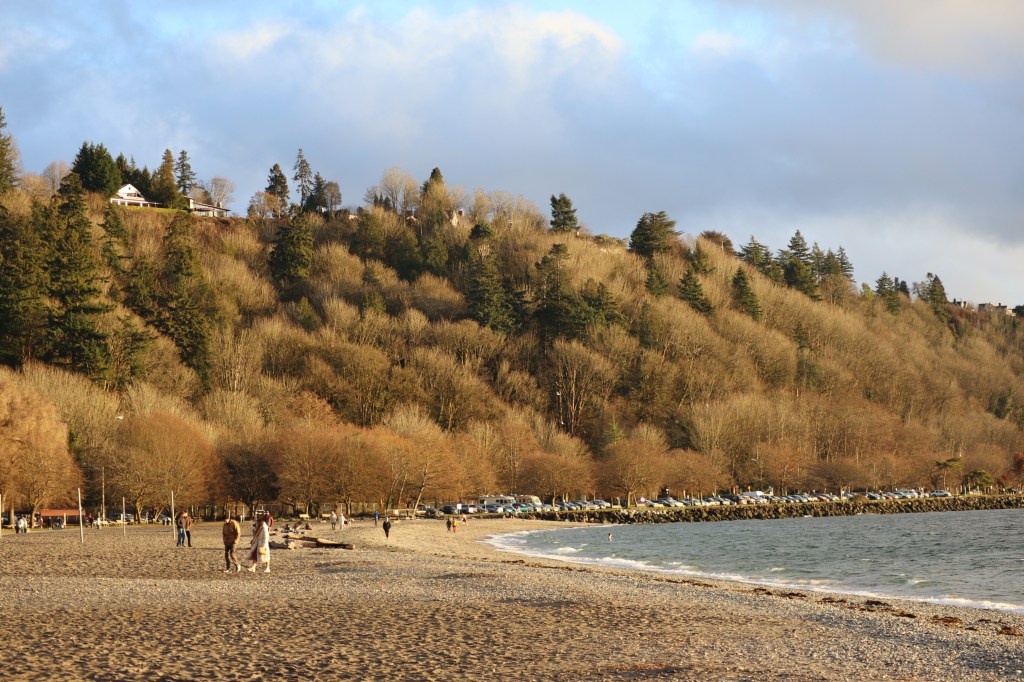
Later that afternoon, after I’d dropped off my friend and spent some time warming up, I was feeling restless. The snow from the morning didn’t stick and the clouds were starting to part. With a scarf and thermos full of hot chocolate, I set out for an early sunset at Golden Gardens, a sandy beach on the west side of Ballard. The point was to enjoy my own company and admire the beach, NOT look for birds.
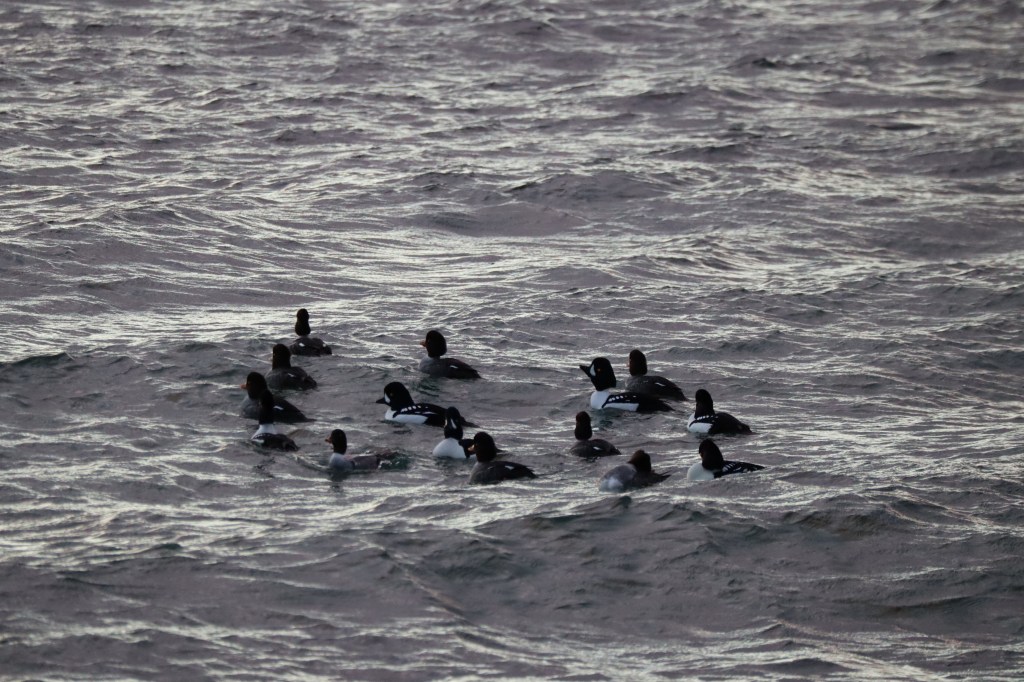
So of course, I brought my camera and binoculars. I saw a couple grebes, none of which were Eared, and an adorable flock of diving Barrow’s Goldeneyes right off the shore. I sat on a log and watched them in the fading winter light, snapping a few pictures, until it got too dark and cold. I was looking forward to birding again when it was warmer.
 Summer Delehanty's Portfolio