
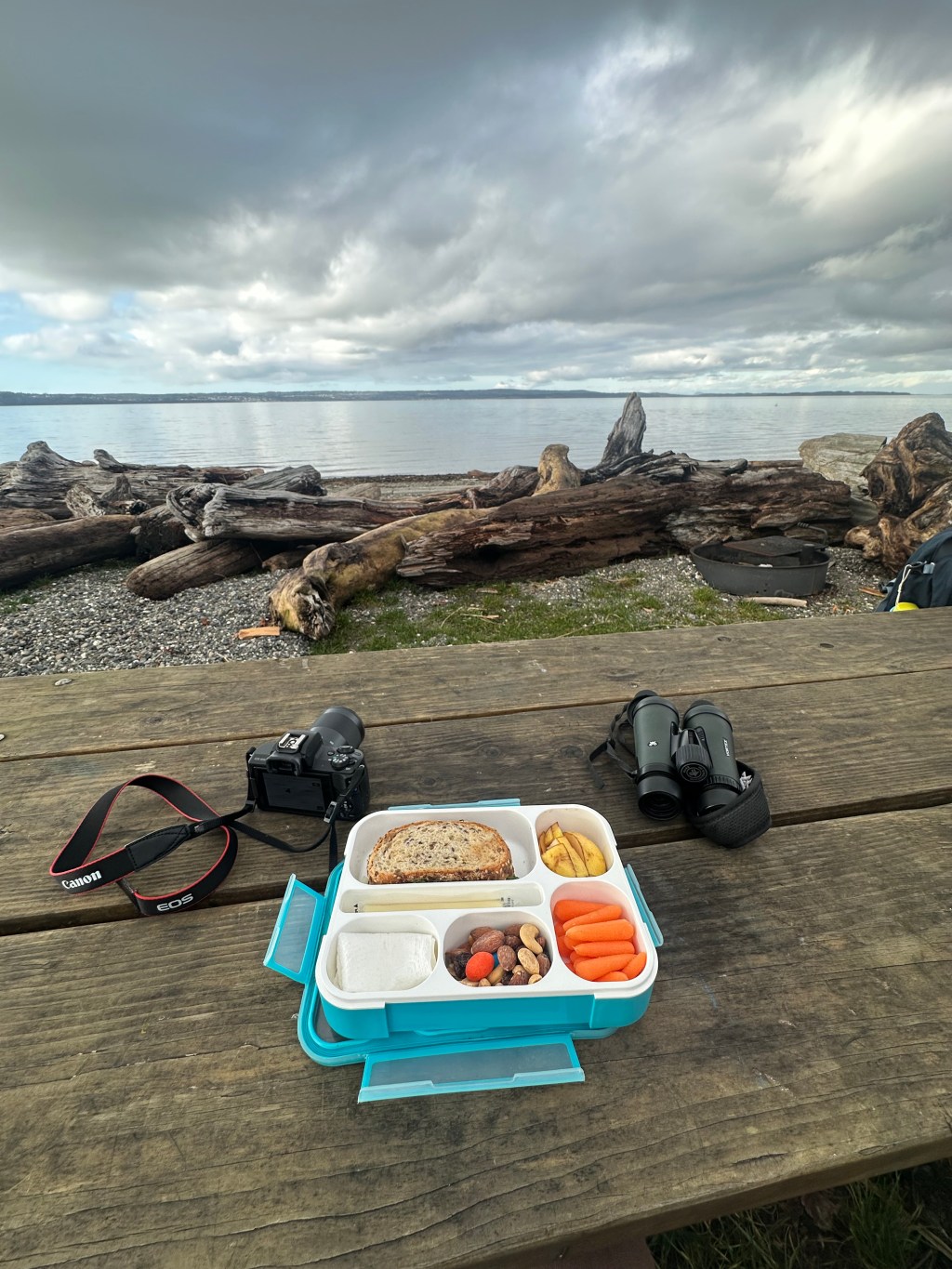
My birdwatcher friend and I coincidentally both got cars for the first time in January 2025. After several threats to chase rarities while the other was in class, we ended up (mostly) joining forces every Saturday we had available, poring over our life lists to maximize the number of new birds we could both see.
Our first destination was an obvious one and required very little deliberation—the Skagit flats. Located along the Pacific Flyway about an hour north of Seattle, the Skagit flats are home to incredible numbers of migrating waterfowl, plus the diurnal Short-eared Owl. We’d both visited before in September with our Field Ornithology class, but were too early for the waterbirds or owls. As soon as classes finished the very first week of the quarter, on January 11th, we grabbed our coffees and departed relatively early Saturday morning.
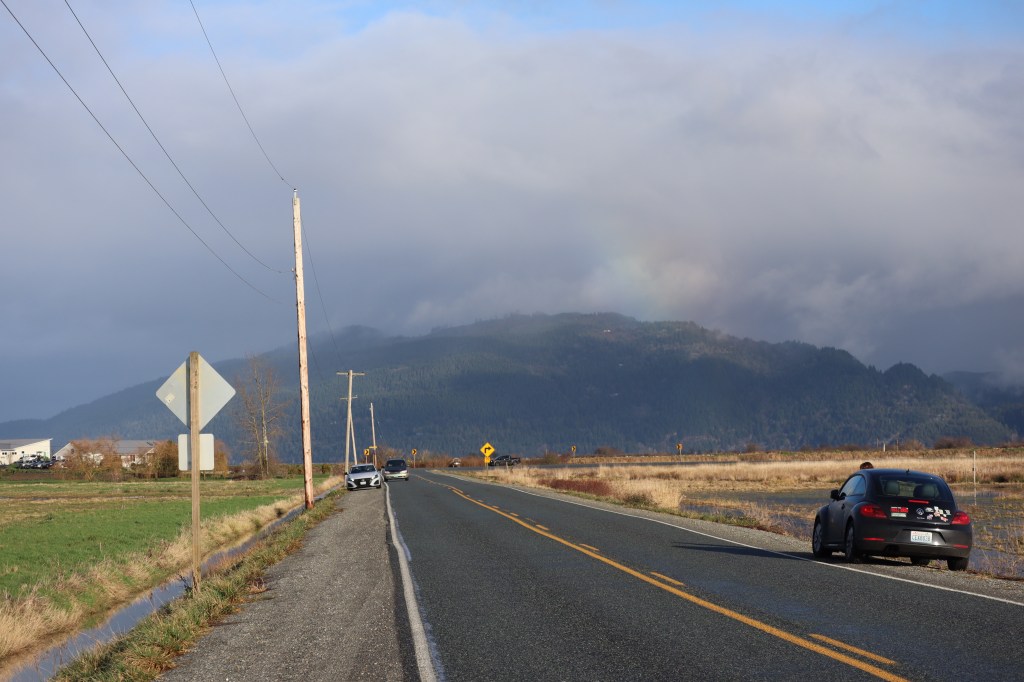
The owls were our main target. They hunt on large stretches of farmland off the side of the road, along with the similar-looking Northern Harriers and Bald Eagles. To the annoyance of farmers that own the land, birders and photographers alike will park on the shoulder at the first sight of a bird and jump out of their cars for a better look, with the less considerate people walking out onto the fields themselves. While we were careful to not trespass on private property, we pulled over the same way.
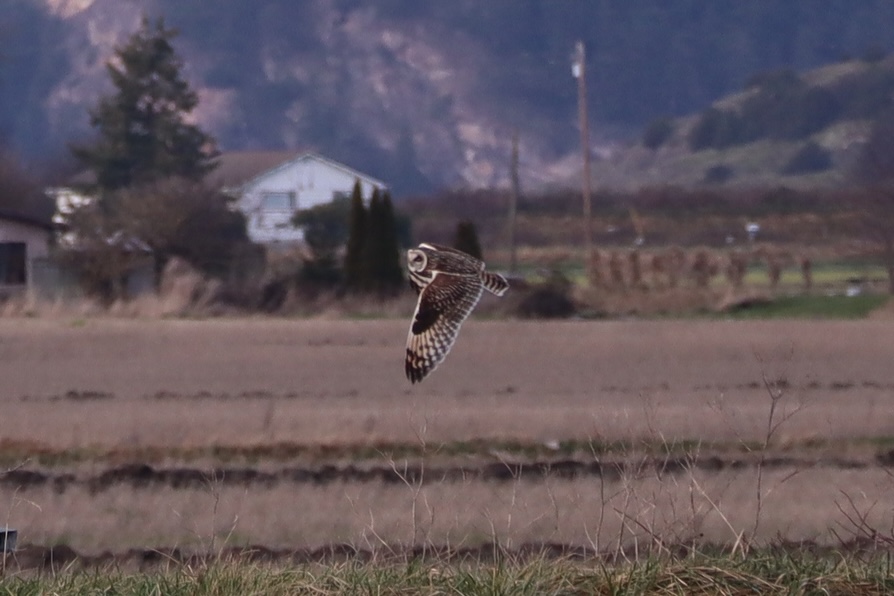
It was only a matter of seconds before we spotted an owl gliding over the fields. With lots of excited pointing and bickering (“are you SURE that’s an owl??”), we chased it across the sky with our cameras, clicking several blurry pictures and squinting to confirm we weren’t just blinded by optimism. We stood on the shoulder of the road, watching it zig-zag across the fields, accompanied by six or seven other groups of people with binoculars and cameras.
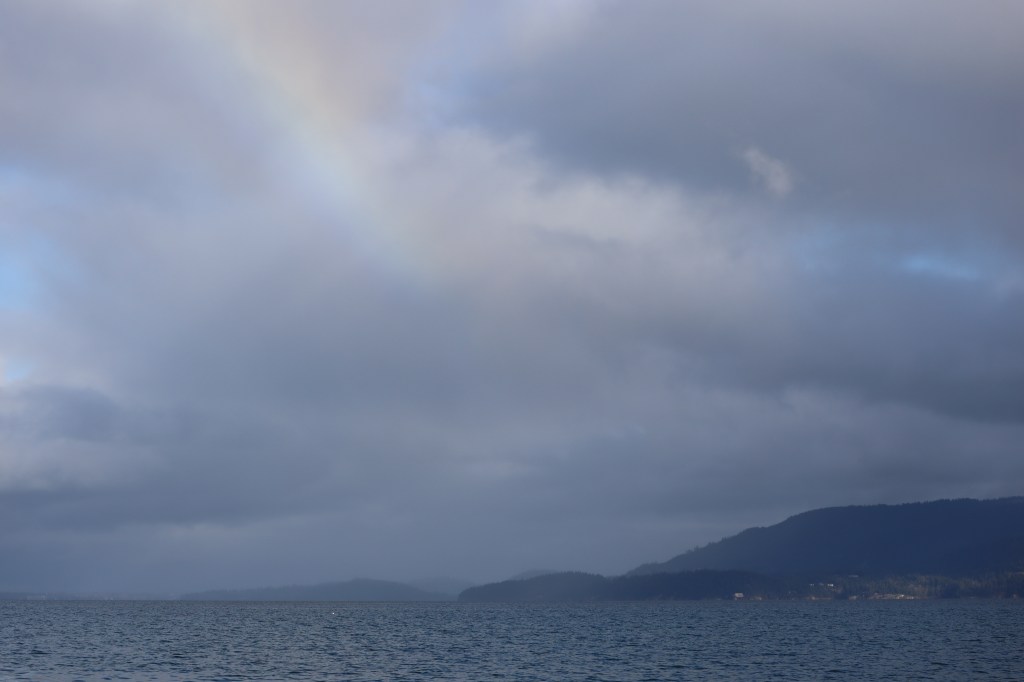
After a mixture of walking and driving up and down that stretch of road, we were satisfied with our views of the owls. We loaded back up in the car and made our way over to Padilla Bay, hoping for a Pacific Loon or Eared Grebe. While we got lucky with some gorgeous views of a rainbow and a charismatic Harlequin Duck, there was no sign of either.
It was only 11am, so we slowly made our way back to Seattle while following the coast. Our next destination was a more marshy area in the Skagit Wildlife Area, called Fir Island Farm Reserve. We parked and walked our way along the short trail. Here, we got better looks of a Short-eared Owl fighting with a harrier, and watched as thousands of Snow Geese erupted in flight over the Skagit Bay. We spent about an hour there, until I got too cold and rushed back to the car.

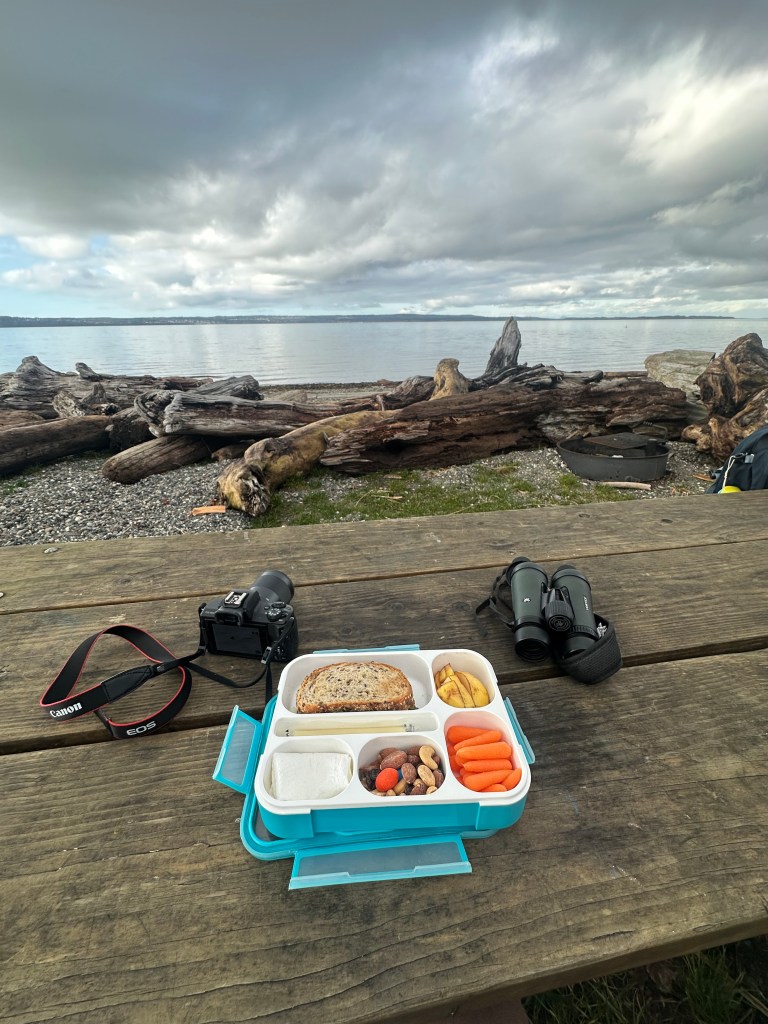
After Fir Island, we didn’t have any other locations planned. While I drove, my friend found us another place to stop. We pulled into Kayak Point and grabbed a picnic table along the water to eat our packed lunches, binoculars at the ready for when something swam along the shore. We found three different species of grebes, but to my dismay, no Eared. Our walk along the point rewarded us with some great views of the football-shaped Rhinoceros Auklet swimming near the dock, and the exciting discovery of a Red-throated Loon, its identity confirmed through pictures sent to my friend’s brother.
It was mid afternoon and we were ready to head home before my friend checked the Rare Bird Alert, seeing reports of a Rock Sandpiper at the Tulalip reservation. He excitedly said that the last sighting was this morning, while we were preoccupied with owls. We took off for the reservation as fast as we could. After arguing over where to park and talking to a security guard, who pointed us in the right direction, we were running down a rocky beach towards the sandpiper’s last location.
Tired and excited and slightly delirious, we lost our minds at every bird or bird-shaped rock that appeared to move out on the jetty. Even with our binoculars and cameras, it was hard to see the far-away silhouettes, backlit by the sun reflecting off the water. We found a Bonaparte’s Gull and all three types of North American scoters (the Black Scoter was particularly exciting, a lifer for both of us), but no sign of the sandpiper. After an hour of inspecting every single part of the entire bay, daylight was fading fast. In January in the Pacific Northwest, sunset is around 4:30, but the sky gets dim well before then as the sun skates along the horizon.
While we couldn’t find the Rock Sandpiper, and later deduced from eBird checklists that it likely left before we got there, we still had a successful run. Raptors, owls, alcids, grebes, mergansers, swans, ducks, other shorebirds, a loon… Both of us walked away with a good number of lifers, and my year list was already at 73 in only 11 days. We drove back to Seattle to spend the evening sorting through photos and start planning our next Saturday excursion.
 Summer Delehanty's Portfolio